
Let’s be honest for a second.
Living paycheck to paycheck in the U.S. isn’t just stressful, it’s draining in a way that’s hard to explain unless you’ve lived it.
You get paid… and for a brief moment, things feel okay.
Then the bills start rolling in—rent, groceries, gas, subscriptions—and suddenly, you’re right back where you started.
Counting dollars.
Delaying purchases.
Hoping nothing unexpected happens.
And if it does? That’s when the real stress kicks in.
If this sounds familiar, you’re far from alone. Millions of Americans are stuck in this exact cycle—even people with decent jobs and steady incomes.
But here’s the part most people don’t tell you:
- It’s not always about how much you earn.
- It’s about how your money is managed.
The good news? This cycle can be broken. And no—you don’t need a massive salary increase or a lucky break to do it.
Let’s walk through how to actually change your situation—step by step.
1. First, Understand What’s Really Going On.
Before you fix anything, you need clarity.
Most people living paycheck to paycheck are dealing with a combination of:
- Spending that matches (or exceeds) income
- No safety net for emergencies
- No clear system for managing money
A lot of people think:
“If I just made more money, everything would be fine.”
That sounds logical, but it’s not always true.
In fact, The Total Money Makeover by Dave Ramsey explains this perfectly: without discipline, more money often just leads to more spending.
So the real problem isn’t just income—it’s structure.
2. Take a Hard Look at Your Spending (Yes, Really)
This part can feel uncomfortable—but it’s powerful.
Go back and look at your last month or two of spending.
Not what you think you spent.
What you actually spent.
You’ll probably notice:
- Subscriptions you forgot about
- More eating out than expected
- Small purchases that quietly add up
Tools like:
- Mint
- YNAB
…make this easier, but even writing things down manually works.
The goal here isn’t to judge yourself.
It’s just to see clearly.
Because once you see it—you can change it.
3. Build a Budget That Feels Realistic (Not Restrictive)
Let’s clear something up:
A budget isn’t about punishing yourself.
It’s about giving your money direction.
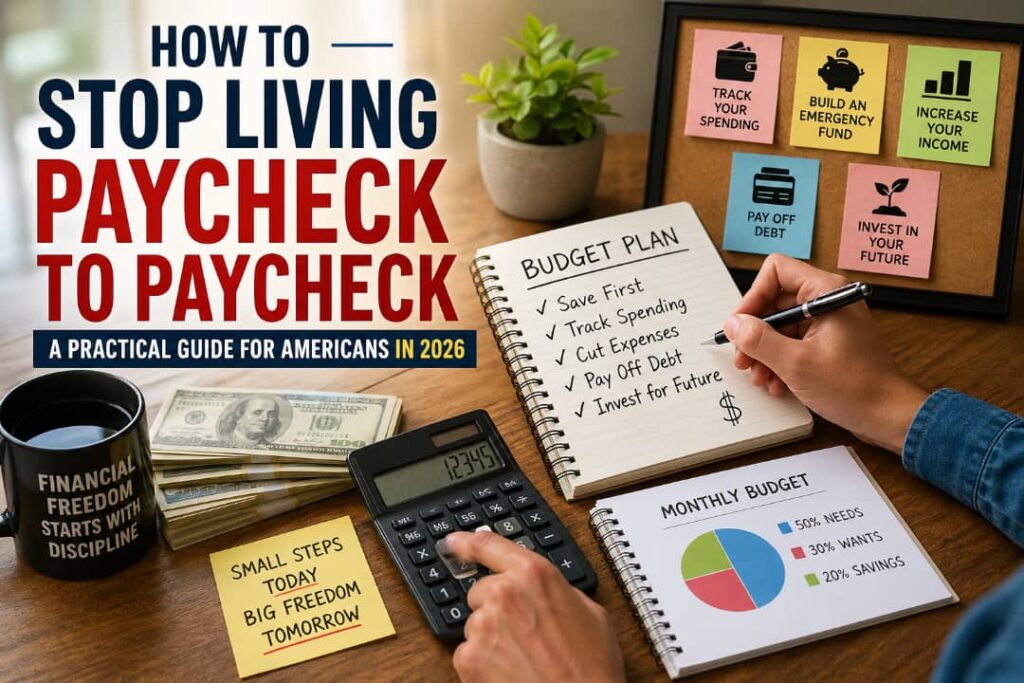
One of the simplest and most effective systems comes from I Will Teach You to Be Rich by Ramit Sethi:
- 50–60% for needs
- 20–30% for wants
- 10–20% for saving and investing
Now here’s the reality for many Americans—rent alone can eat up a huge chunk of income.
So don’t aim for perfection.
Aim for progress.
Even small adjustments can start shifting your situation.
4. Cut Back—But Don’t Make Your Life Miserable
This is where people usually go wrong.
They try to cut everything… and then burn out within weeks.
Instead, focus on what actually makes a difference:
- Cancel subscriptions you don’t use
- Cook at home a few more times per week
- Call and negotiate bills (yes, this works more than you think)
- Be intentional with impulse spending
You don’t need to eliminate joy—you just need to reduce waste.
Because here’s the truth:
Spending $10 a day without thinking = $300/month
That’s $3,600 a year.
That’s not small. That’s life-changing money.
5. Build a Small Emergency Fund (This Changes Everything)
If you’re stuck in the paycheck-to-paycheck cycle, emergencies are what keep pulling you back in.
Car breaks down? Debt.
Unexpected bill? Stress.
Something goes wrong? Panic.
That’s why your first goal should be simple:
- Save $500
- Then push it to $1,000
This idea is heavily emphasized in The Total Money Makeover by Dave Ramsey—and for good reason.
It creates breathing room.
And breathing room changes how you live.
6. Increase Your Income (This Is Your Power Move)
Cutting expenses helps—but there’s only so much you can cut.
Income, on the other hand? That’s where things really shift.
In today’s economy, having just one income stream is risky.
That’s why so many Americans are turning to:
- Freelancing
- Affiliate marketing
- Ride-sharing (Uber/Lyft)
- Selling digital products
Even an extra $300–$1,000 per month can:
- Cover bills
- Build savings
- Reduce stress instantly
Think of it this way:
Cutting expenses keeps you afloat.
Increasing income helps you move forward.
7. Start Paying Yourself First
Most people save what’s left after spending.
The problem? There’s usually nothing left.
Try flipping it:
- Save first
- Spend what remains
Even if it’s just 5–10%, it builds momentum.
Automate it if possible:
- Savings account
- Investments
- Emergency fund
This approach is a core idea in Your Money or Your Life by Vicki Robin and Joe Domingues, which focuses on being intentional with money—not reactive.
8. Watch Out for Lifestyle Inflation
This one is sneaky.
You get a raise—and naturally, you want to enjoy it.
So you upgrade:
- Better apartment
- New car
- More spending
And suddenly… nothing has changed.
You’re still stuck.
Instead, try this:
- Keep your lifestyle steady
- Increase your savings and investments
That’s how wealth is actually built—quietly and consistently.
9. Get Serious About Debt
Debt is one of the biggest reasons people feel stuck.
Especially high-interest debt like:
- Credit cards
- Payday loans
You have two main strategies:
- Snowball method (smallest debts first)
- Avalanche method (highest interest first)
Both work.
The key is consistency.
And yes—The Total Money Makeover by Dave Ramsey strongly recommends the snowball method because it builds momentum fast.
10. Shift Your Money Mindset
This might be the most important shift of all.
If you keep telling yourself:
- “I’ll never get ahead”
- “Saving is impossible”
…your actions will follow that belief.
Instead, start small:
- “I’m improving my money habits”
- “I’m making better choices”
It may sound simple—but it changes how you behave.
Books like I Will Teach You to Be Rich by Ramit Sethi focus heavily on this—confidence over guilt.
11. Build a Financial Cushion (Your Exit Strategy)
This is where life starts to feel different.
Your goal:
- Save 1 month of expenses
- Then 3–6 months
At this point:
- You stop worrying about every paycheck
- You gain flexibility
- You feel in control
You’re no longer surviving—you’re planning.
12. Start Building Real Wealth
Once you’re stable, it’s time to grow.
Simple options:
- 401(k) (especially if your employer matches)
- Roth IRA
- Index funds
You don’t need to be an expert.
You just need consistency.
This is how people move from stress… to stability… to financial independence.
Final Thoughts: This Isn’t Overnight—But It Is Possible
Breaking the paycheck-to-paycheck cycle doesn’t happen instantly.
But it does happen—step by step.
Not through perfection.
But through consistency.
Start small:
- Track your spending
- Cut one unnecessary expense
- Save your first $100
That’s how change begins.
Bottom Line
Living paycheck to paycheck isn’t permanent.
It’s a pattern.
And patterns can be changed.
With the right steps, you can move from: Stressed → Stable → Secure → Wealthy
And it all starts with one decision:
What will you do differently today?
Frequently Asked Questions (FAQs)
1. Why am I living paycheck to paycheck even though I earn a decent salary?
This is more common than people think. In many cases, it’s not about income—it’s about spending habits, rising living costs, and lack of a structured money plan. Without a system, expenses tend to grow alongside income, leaving little or nothing to save.
2. How much money should I save to stop living paycheck to paycheck?
Start small. Aim for at least $500 to $1,000 as a starter emergency fund. From there, build toward saving 3–6 months’ worth of expenses. Even a small cushion can break the cycle by preventing you from relying on debt during emergencies.
3. What is the fastest way to stop living paycheck to paycheck?
The fastest way is to combine two actions:
- Cut unnecessary expenses immediately
- Increase your income through a side hustle or extra work
Doing both at the same time accelerates your progress significantly.
4. Is budgeting really necessary if I already know my expenses?
Yes. Knowing your expenses is not the same as controlling them. A budget gives every dollar a purpose, helping you avoid overspending and ensuring you consistently save and invest.
5. What budgeting method works best for beginners?
A simple percentage-based budget works well:
- 50–60% needs
- 20–30% wants
- 10–20% savings
This approach, popularized in books like I Will Teach You to Be Rich by Ramit Seth, is easy to follow and flexible.
6. How can I save money when my income is already low?
Focus on small, consistent changes:
- Reduce daily unnecessary spending
- Cook at home more often
- Cancel unused subscriptions
At the same time, look for ways to increase your income—even an extra $100–$300 per month can make a big difference.
7. Should I pay off debt or save money first?
Do both, but prioritize a small emergency fund first (around $500–$1,000). After that, focus on paying off high-interest debt while continuing to save a little each month.
8. What is the best method to pay off debt quickly?
Two popular strategies are:
- Snowball method (pay smallest debts first for motivation)
- Avalanche method (pay highest interest debts first to save money)
The snowball method is strongly recommended in The Total Money Makeover by Dave Ramsey because it builds momentum.
9. How do I avoid falling back into the paycheck-to-paycheck cycle?
Build systems, not just habits:
- Automate savings
- Track spending regularly
- Avoid lifestyle inflation when income increases
Consistency is what keeps you out of the cycle long-term.
10. What is lifestyle inflation and how does it affect me?
Lifestyle inflation happens when your spending increases as your income rises. For example, upgrading your car or apartment after a raise. This keeps you stuck financially, even if you’re earning more.
11. How important is an emergency fund?
It’s critical. Without an emergency fund, any unexpected expense can push you back into debt. It acts as your financial safety net and gives you peace of mind.
12. Can side hustles really help me stop living paycheck to paycheck?
Absolutely. Increasing your income is one of the fastest ways to gain financial stability. Side hustles like freelancing, affiliate marketing, or gig work can provide extra cash to save or pay off debt.
13. How long does it take to stop living paycheck to paycheck?
It depends on your situation, but many people start seeing progress within 3–6 months of consistent effort. Achieving full financial stability may take 1–2 years, depending on income and debt levels.
14. What mindset changes are needed to improve my finances?
Shift from:
- Short-term thinking → long-term planning
- Impulse spending → intentional spending
Books like Your Money or Your Life by Vicki Robin and Joe Dominguez emphasize aligning your money with your values.
15. What are the biggest mistakes that keep people stuck financially?
Some of the most common mistakes include:
- Not tracking spending
- Relying heavily on credit cards
- Ignoring small expenses
- Failing to save consistently
- Upgrading lifestyle too quickly
Avoiding these can dramatically improve your financial situation.
16. Is it possible to stop living paycheck to paycheck without earning more money?
Yes—but it’s harder. You can make progress by cutting expenses and managing money better, but increasing your income will significantly speed up the process.
17. What should I do first if I want to change my financial situation today?
Start with one simple action:
- Track your spending today
- Cut one unnecessary expense
- Save your first $50–$100
Small steps build momentum—and momentum creates real change.
18. Are personal finance books actually helpful?
Yes, if you apply what you learn. Books like The Total Money Makeover and I Will Teach You to Be Rich provide proven frameworks that have helped millions of people improve their finances.