
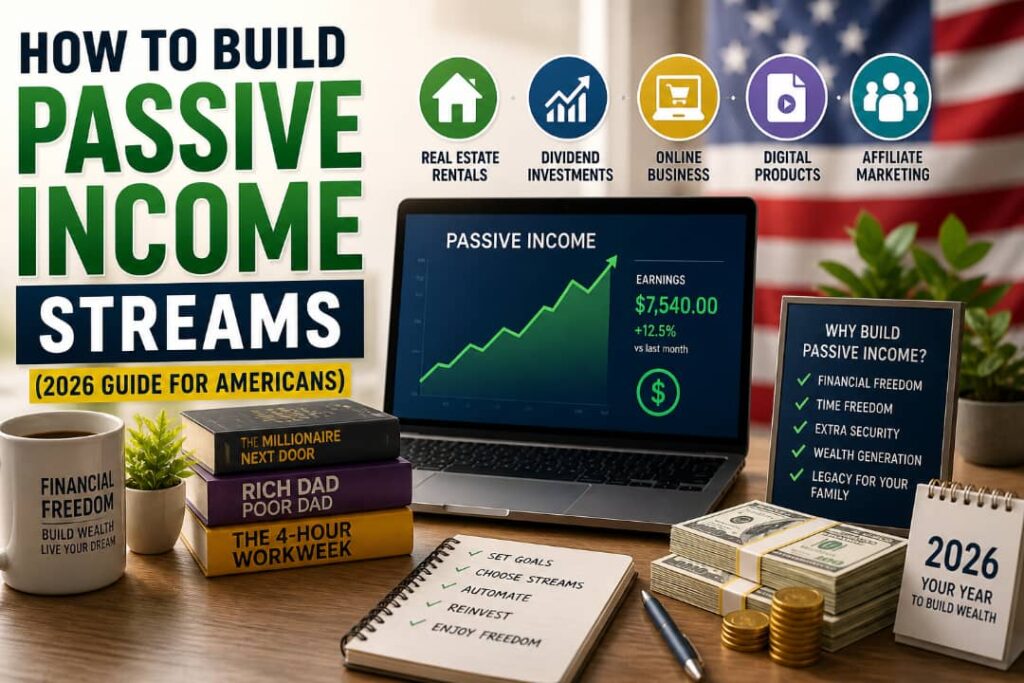
Let’s be real for a second—passive income gets hyped up a lot online. You’ve probably seen people claim you can “make money while you sleep” without doing much work. That sounds great… but it’s not the full picture.
The truth is, passive income does take effort upfront. You’ll need to learn, build something valuable, and stay consistent for a while. But once you get it right, it can start generating income with very little day-to-day involvement.
That’s the sweet spot—and that’s what this guide is all about.
Whether you’re trying to leave your 9–5, create a safety net, or just earn extra cash on the side, here’s how to build real passive income streams in 2026.
What Passive Income Actually Means
At its core, passive income is money you earn without actively working for every dollar—after the initial setup.
A simple way to think about it? It’s like planting a tree.
- First, you prepare the ground (learning + planning)
- Then, you plant and take care of it (effort + consistency)
- Eventually, it grows and starts producing fruit (income)
This idea is explained really well in Rich Dad Poor Dad, which focuses on building assets that pay you—rather than working for money forever.
Why Passive Income Matters More Than Ever in 2026
Let’s face it—the economy isn’t as predictable as it used to be.
Jobs aren’t as secure, costs are rising, and technology is changing how we work. Relying on just one income source today is risky.
That’s why more people are turning to multiple income streams.
Books like The 4-Hour Workweek emphasize something powerful:
👉 It’s not about working harder—it’s about building systems that work for you.
With passive income, you can:
- Feel less stressed about money
- Have more control over your time
- Build wealth gradually
- Protect yourself if something unexpected happens
5 Passive Income Streams That Actually Work
There are tons of ideas out there—but these are the ones that consistently work, especially in the U.S.
1. Affiliate Marketing (The Easiest Place to Start)
If you’re starting from scratch, this is one of the best options.
Affiliate marketing is simple: You recommend products → someone buys → you earn a commission.
That’s it.
You can do this through:
- A blog
- YouTube
- TikTok
- Even email newsletters
Why it works so well in the U.S.:
- People shop online a lot
- There are strong affiliate programs (Amazon, ClickBank, ShareASale)
- Buyers are ready to spend
For example, you could write:
- “Best laptops for remote work”
- “Top budgeting apps in the U.S.”
Once your content ranks on Google, it can bring in income for months—or even years.
2. Blogging (Your Long-Term Asset)
Blogging might seem old-school—but it still works incredibly well.
A blog can make money through:
- Ads
- Affiliate links
- Sponsored content
The key is consistency.
That’s something Atomic Habits talks about a lot—small actions done regularly lead to big results over time.
A simple strategy:
- Pick a niche (finance, health, tech)
- Publish 20–50 helpful articles
- Let traffic build gradually
Once your blog gains traction, it becomes a traffic machine that works for you 24/7.
3. Digital Products (Work Once, Earn Repeatedly)
This is where things get really exciting.
With digital products, you create something once—and sell it over and over again.
Some ideas:
- Ebooks
- Online courses
- Budget templates
- Resume designs
No inventory. No shipping. High profit margins.
For example: You could create an ebook like “Make Money Online for Beginners in the U.S.” and sell it on platforms like Gumroad or your own site.
Once it’s live, it can keep earning with minimal updates.
4. Dividend Stocks (The Most Passive Option)
If you’re looking for something truly hands-off, dividend investing is a solid choice.
Here’s how it works:
- You buy shares in companies
- They pay you a portion of their profits regularly
Some well-known dividend-paying companies include:
- Coca-Cola
- Johnson & Johnson
- Procter & Gamble
The philosophy behind this approach is explained in The Intelligent Investor—focus on long-term growth and patience.
Pros:
- Very passive
- Reliable over time
Cons:
- You need some starting capital
- Growth is slower in the beginning
5. YouTube Automation (No Camera Needed)
You don’t have to be on camera to succeed on YouTube.
Many creators run “faceless” channels by:
- Outsourcing video creation
- Using voiceovers and stock footage
You can make money through:
- Ads
- Affiliate links
- Sponsorships
Popular niches include:
- Finance
- Tech
- Motivation
The best part?
A single video can keep earning for years once it gains traction.
A Simple Step-by-Step Plan
If this feels overwhelming, don’t worry—keep it simple.
Step 1: Pick One Path
Don’t try everything at once.
Start with:
- Affiliate marketing
- Blogging
- Or digital products
Step 2: Learn Just Enough to Start
You don’t need to know everything.
Use:
- YouTube
- Blogs
- Books like The Millionaire Fastlane
Then take action quickly.
Step 3: Focus on Helping People
Your content should answer real questions.
For example:
- “How can I save money in the U.S.?”
- “What are the best side hustles right now?”
If you solve problems, income follows.
Step 4: Get Traffic
No traffic = no income.
Focus on:
- Google SEO
- TikTok
- YouTube
Step 5: Start Monetizing
Once people are visiting your content:
- Add affiliate links
- Turn on ads
- Offer products
Step 6: Automate and Scale
Now you’re building real passive income.
You can:
- Hire writers
- Automate emails
- Schedule posts
Mistakes to Avoid
A few things that trip people up:
❌ Expecting Fast Results
This takes time—usually a few months before you see real income.
❌ Jumping Between Ideas
Pick one thing and stick with it.
❌ Ignoring SEO
If people can’t find your content, it won’t make money.
❌ Skipping Email Lists
Email is one of the best long-term assets you can build.
Tools That Make Things Easier
If you’re doing affiliate marketing, these tools are worth looking into:
- Website: Bluehost, WordPress
- SEO: Ahrefs, SEMrush
- Email: ConvertKit, Mailchimp
- Design: Canva
- Content help: ChatGPT
You can also recommend these tools and earn commissions.
What Timeline Should You Expect?
Here’s a realistic breakdown:
- Month 1: Learning + setup
- Month 2–3: Creating content
- Month 4–6: First income
- Month 6+: Scaling up
It’s not instant—but it’s worth it.
Final Thoughts
Passive income isn’t magic—and it’s not instant.
But it is achievable.
If you stay consistent, focus on one path, and build something valuable, you can create income streams that support you long-term.
As Rich Dad Poor Dad puts it:
👉 “The rich don’t work for money—they make money work for them.”
That’s the mindset shift.
Your Simple Action Plan
If you’re ready to start:
- Pick one method (affiliate marketing is a great start)
- Choose a niche
- Write your first 5 blog posts
- Add affiliate links
- Stay consistent for 90 days
Frequently Asked Questions
1. What is passive income, and can beginners really build it?
Yes, beginners can absolutely build passive income—even with no prior experience. Passive income is money you earn from something you’ve already set up, like a blog, affiliate links, or investments. While it takes effort upfront, it becomes easier over time.
If you’re just starting, consider launching a simple blog using WordPress with hosting from Bluehost. It’s one of the easiest and most beginner-friendly ways to start building an online income stream.
2. How long does it take to start earning passive income?
Most people begin seeing results within 3 to 6 months, depending on consistency and strategy. Blogging and affiliate marketing take time to gain traffic, but once they do, income can become steady.
To speed things up, using SEO tools like Ahrefs or SEMrush can help you find low-competition keywords and rank faster on Google.
3. What is the easiest passive income stream to start in 2026?
Affiliate marketing is one of the easiest ways to get started because you don’t need to create your own products. You simply recommend tools or services and earn a commission.
For example, you can promote tools like Canva for beginners who need graphics, or email platforms like ConvertKit for content creators.
4. Do I need money to start building passive income?
Not necessarily. You can start with very little investment. Blogging, YouTube, and affiliate marketing all have low barriers to entry.
That said, investing in a reliable hosting service like Bluehost or using tools like Canva can make your journey faster and more professional.
5. Can I build passive income while working a full-time job?
Yes, and that’s how most people begin. You can dedicate a few hours each day or weekends to building your income streams.
To stay consistent, tools like ConvertKit can help you automate emails and stay connected with your audience even when you’re busy.
6. Which passive income stream makes the most money?
Scalable online models like blogging, affiliate marketing, and digital products tend to have the highest earning potential because they don’t require constant effort once set up.
For example, using SEMrush to optimize your content can significantly increase your traffic—and your income.
7. Is passive income truly passive?
Not at first. You’ll need to put in effort upfront—creating content, setting up systems, or building an audience. But over time, the workload decreases.
Automation tools like ConvertKit can help turn your efforts into a more passive system by handling email sequences and promotions automatically.
8. What are the best tools to build passive income online?
Some of the most effective tools include:
- WordPress for building your website
- Ahrefs for keyword research
- ConvertKit for email automation
- Canva for creating visuals
These tools not only save time but also help you scale faster.
9. How do I choose the right passive income stream?
Start with something that fits your lifestyle and interests. If you enjoy writing, blogging is a great option. If you prefer video, YouTube might be better.
For beginners, setting up a blog with Bluehost and managing it on WordPress is one of the simplest and most effective paths.
10. Do I need technical skills to succeed?
No, most tools today are beginner-friendly. You don’t need coding or advanced tech skills to get started.
Platforms like WordPress and design tools like Canva are designed for beginners and have plenty of tutorials to guide you.
11. What are the biggest mistakes beginners make?
Some common mistakes include:
- Expecting quick results
- Jumping between ideas
- Ignoring SEO
- Not building an email list
Using tools like Ahrefs can help you avoid SEO mistakes, while ConvertKit helps you build and manage your email list effectively.
12. Can passive income replace my full-time job?
Yes, but it takes time and consistency. Many people start part-time and gradually grow their income streams.
By combining platforms like WordPress with monetization strategies and tools like SEMrush, you can steadily build income that may eventually replace your job.
13. Is affiliate marketing still profitable in 2026?
Yes, affiliate marketing is still highly profitable, especially as online shopping continues to grow.
You can promote beginner-friendly tools like Canva or advanced tools like Ahrefs, depending on your audience.
14. How many income streams should I have?
It’s best to start with one and master it before adding more. Over time, aim for 2–3 solid income streams.
For example, you might start with a blog on WordPress, then expand into email marketing with ConvertKit.
15. What’s the fastest way to make your first $100 online?
The fastest way is usually combining quick strategies with long-term ones:
- Affiliate marketing
- Freelancing (to generate initial cash)
- Selling a simple digital product
To accelerate results, use tools like SEMrush to find opportunities and Canva to create high-quality content quickly.