
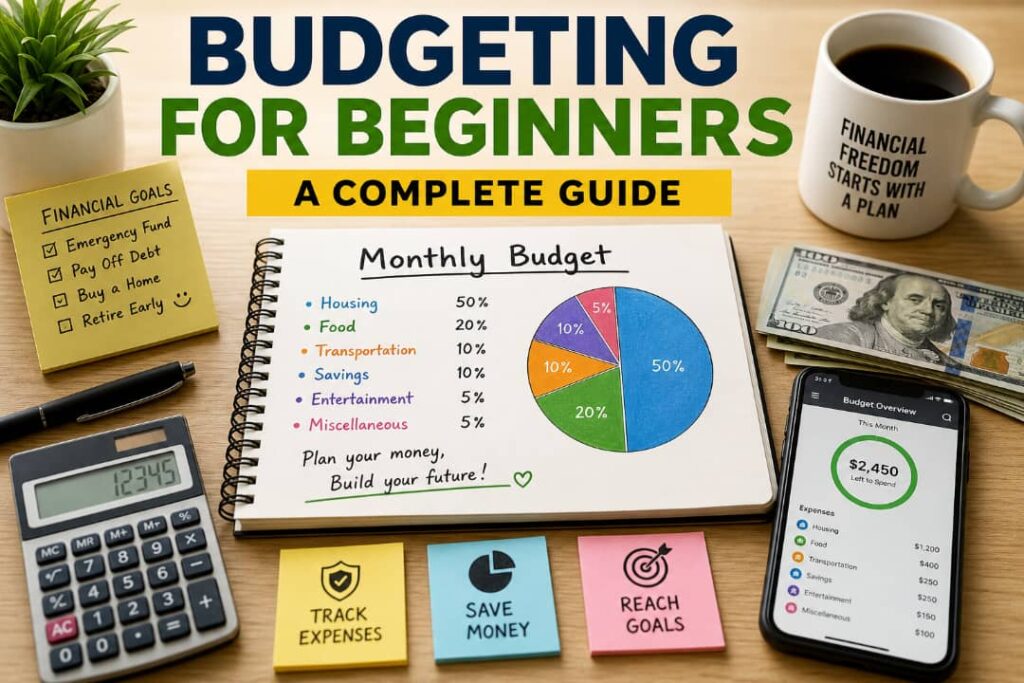
Let’s be real for a second—budgeting doesn’t exactly sound exciting. For a lot of Americans, it feels restrictive, confusing, or like something you only do when you’re already in financial trouble.
But here’s the truth: a budget isn’t about limiting your life—it’s about finally feeling in control of it.
Whether you’re living paycheck to paycheck, trying to pay off debt, or just want to stop wondering where your money disappears every month, learning how to budget is one of the smartest moves you can make. And the good news? It doesn’t have to be complicated.
Why Budgeting Matters More Than Ever in 2026
Let’s face it—life in 2026 isn’t cheap. Rent is high, groceries cost more than they used to, and even basic expenses seem to keep climbing.
That’s exactly why budgeting matters.
When you have a budget, you:
- Actually know where your money is going
- Avoided falling into unnecessary debt
- Start building savings (even if it’s small at first)
- Feel more confident about your financial future
As Dave Ramsey says in his book; The Total Money Make Over, “A budget is telling your money where to go instead of wondering where it went.” And honestly, that hits home for a lot of people.
Step 1: Understand Your Income (What You Really Have)
Before you start planning anything, you need to know how much money you’re actually working with.
And no—it’s not your salary on paper.
What matters is your take-home pay—the money that actually hits your bank account after taxes, insurance, and retirement contributions.
Simple Example:
- Salary: $4,000/month
- Take-home pay: about $3,100/month
That $3,100 is your real starting point.
If you have side hustles or freelance income, try to estimate a safe average. It’s better to underestimate than assume you’ll earn more than you actually do.
Step 2: Track Your Spending (This Is the Eye-Opener)
This is where things get interesting.
Most people think they know where their money goes… until they actually track it.
And suddenly it’s like: “Wait… how much did I spend on takeout last month?!”
Break Your Spending Into 3 Buckets:
- Fixed Expenses (the non-negotiables)
- Rent or mortgage
- Car payments
- Insurance
- Variable Expenses (they change monthly)
- Groceries
- Gas
- Utilities
- Discretionary Spending (the lifestyle stuff)
- Eating out
- Entertainment
- Subscriptions
Apps like Mint or YNAB (You Need A Budget) can do most of the tracking for you, which makes this step way easier.
Step 3: Pick a Budgeting Style That Fits You
Here’s something people don’t talk about enough: there’s no “perfect” budget.
The best system is simply the one you’ll actually stick with.
- The 50/30/20 Rule (Simple & Flexible)
Made popular by Elizabeth Warren in All Your Worth, this method keeps things straightforward:
- 50% → Needs
- 30% → Wants
- 20% → Savings & debt
It’s great if you don’t want to micromanage every dollar.
- Zero-Based Budgeting (Total Control)
This is where every dollar gets assigned a job.
Income minus expenses = zero.
It’s a favorite of Dave Ramsey and works well if you like being very intentional with your money.
- The Envelope System (Old School, Still Effective)
You set limits for categories and stick to them—traditionally with cash, but now also digitally.
If overspending is your biggest challenge, this can really help.
Step 4: Give Your Money a Purpose (Set Goals)
Budgeting without goals feels… pointless.
You need something you’re working toward.
Short-Term Goals:
- Save your first $1,000
- Pay off a credit card
Long-Term Goals:
- Buy a home
- Retire comfortably
- Start a business
Books like The Total Money Makeover by Dave Ramsey lay out simple, step-by-step ways to reach these milestones.
Step 5: Build an Emergency Fund (Your Safety Net)
If there’s one thing that can completely change your financial life, it’s this.
Start small:
- $1,000 as a starter fund
Then build up:
- 3–6 months of living expenses
Why? Because life happens.
The car breaks down. Medical bill shows up. Something unexpected always comes along—and without savings, that usually turns into debt.
Step 6: Cut Back (Without Feeling Deprived)
Budgeting doesn’t mean you stop enjoying life.
It just means you spend on purpose.
Easy Ways to Save:
- Cancel subscriptions you don’t use
- Cook at home a bit more
- Avoid impulse buying
Apps like PocketGuard are great because they show you exactly how much money you can safely spend without messing up your budget.
Step 7: Tackle Debt the Smart Way
Debt can feel overwhelming—but with a plan, it becomes manageable.
Two Popular Strategies:
Debt Snowball (Motivation First)
- Pay off the smallest debts first
- Build momentum and confidence
Debt Avalanche (Math First)
- Focus on high-interest debts
- Save more money over time
Books like I Will Teach You to Be Rich by Ramit Sethi take a more modern, flexible approach to managing money and debt.
Step 8: Use Tools That Make Life Easier
You don’t have to do this manually.
There are apps that can simplify everything:
- YNAB (You Need A Budget) → Great if you want control
- Mint → Good for beginners
- EveryDollar → Clean and simple
Most of these connect to your bank accounts and automatically track your spending.
Step 9: Check In With Your Budget (Monthly)
Your budget isn’t something you set once and forget.
Life changes. Expenses change. Income changes.
So your budget should too.
Even just 20–30 minutes a month reviewing your finances can make a huge difference.
Common Mistakes (So You Can Avoid Them)
Let’s keep it real—everyone messes up at first.
Here are some common pitfalls:
Being too strict
If your budget feels like punishment, you’ll quit.
Forgetting irregular expenses
Things like holidays or car repairs can sneak up on you.
Not tracking spending
If you’re not tracking, you’re guessing.
Giving up too quickly
Your first budget won’t be perfect—and that’s normal.
How to Stay Consistent (This Is the Real Secret)
Budgeting isn’t about being perfect—it’s about sticking with it.
A few things that help:
- Automate your savings
- Set reminders to check your spending
- Celebrate progress (even small wins)
- Keep your goals visible
Reading Your Money or Your Life by Vicki Robin can also help you rethink your relationship with money in a powerful way.
A Simple Budget Example
Let’s say you earn $3,000/month:
- Needs: $1,500
- Wants: $900
- Savings/Debt: $600
That’s it. Clean, simple, and easy to follow.
Final Thoughts: This Is About Freedom
At the end of the day, budgeting isn’t about restrictions—it’s about options.
When you know where your money is going, you:
- Stress less
- Save more
- Make better decisions
You don’t need a perfect system. As it turns out, you just need to start.
Track your spending. Make a simple plan. Adjust as you go.
Over time, things get easier—and your money finally starts working for you, not against you.
Quick Recap
- Know what you actually earn
- Track your spending honestly
- Pick a budgeting method that fits your life
- Set clear goals
- Build an emergency fund
- Use tools to stay organized
- Adjust your budget regularly
Frequently Asked Questions (FAQs)
1. What is the easiest way to start budgeting as a beginner?
The easiest way to start budgeting is to track your income and expenses for at least 30 days. This helps you understand your spending habits before making changes. Many beginners find apps like Mint or YNAB (You Need A Budget) helpful because they automatically categorize your spending and simplify the process.
2. Which budgeting method is best for beginners?
The 50/30/20 rule is one of the best methods for beginners because it’s simple and flexible. It was popularized by Elizabeth Warren in All Your Worth.
If you want more control, you might prefer zero-based budgeting, which is strongly recommended by Dave Ramsey.
3. How much of my income should I save each month?
A good starting point is saving at least 20% of your income, but if that feels overwhelming, start smaller—even 5–10% is progress. The key is consistency. Tools like PocketGuard can help you figure out how much you can safely save without affecting your bills.
4. What is a realistic budget for someone living paycheck to paycheck?
If you’re living paycheck to paycheck, focus on covering essentials first and gradually building a small emergency fund. Start by cutting unnecessary expenses and tracking every dollar. Apps like EveryDollar are especially useful for creating a clear, zero-based plan.
5. How do I stick to a budget without feeling restricted?
The secret is to include fun money in your budget. A good budget isn’t about cutting everything—it’s about planning your spending. Books like I Will Teach You to Be Rich by Ramit Sethi emphasize spending guilt-free on what you love while cutting back on what you don’t.
6. What is an emergency fund and how much should I have?
An emergency fund is money set aside for unexpected expenses like medical bills or car repairs.
Start with $1,000, then build up to 3–6 months of living expenses. This is a core principle taught in The Total Money Makeover by Dave Ramsey.
7. Are budgeting apps really worth it?
Yes—budgeting apps can save time and reduce stress by automating tracking and giving you real-time insights. Popular options like YNAB (You Need A Budget) and Mint help you stay consistent, which is the hardest part of budgeting.
8. How do I budget with irregular income?
If your income varies (freelancing, side hustles), base your budget on your lowest expected monthly income. This keeps your finances stable. Then treat extra income as bonus money for savings or debt repayment. Budgeting tools like YNAB (You Need A Budget) are especially helpful for managing fluctuating income.
9. What’s the fastest way to get out of debt?
Two popular strategies are:
- Debt Snowball (pay smallest debts first)
- Debt Avalanche (pay highest interest first)
The snowball method, promoted by Dave Ramsey, works well if you need motivation, while the avalanche method saves more money long-term.
10. How often should I review my budget?
You should review your budget at least once a month, but weekly check-ins can help you stay on track. Budgeting apps like PocketGuard make this easy by showing your spending in real time.
11. What are the biggest budgeting mistakes beginners make?
Common mistakes include:
- Not tracking expenses
- Being too strict
- Forgetting irregular costs
- Giving up too quickly
Reading mindset-focused books like Your Money or Your Life by Vicki Robin can help you build a healthier relationship with money.
12. Can budgeting actually help me build wealth?
Absolutely. Budgeting is the foundation of wealth building. It helps you control spending, increase savings, and invest consistently over time. Without a budget, it’s much harder to grow your money intentionally.
13. Is it better to budget weekly or monthly?
Most people prefer monthly budgeting because bills are usually monthly. However, weekly budgeting can help if you struggle with overspending. Apps like EveryDollar allow you to break your budget into smaller, manageable periods.
14. Do I need to budget if I already make good money?
Yes—income alone doesn’t guarantee financial success. Many high earners still struggle financially because they don’t track spending. Budgeting ensures your money is working toward your goals, not just disappearing.
15. What tools or resources can help me improve my budgeting skills?
Some of the best resources include:
- Apps like Mint and YNAB (You Need A Budget)
- Books like The Total Money Makeover and I Will Teach You to Be Rich
- Online budgeting calculators and templates
These tools make budgeting easier, especially for beginners.