
By staff | Last Updated: June 2026
6-minute read
Getting Paid Online Should Be Simple
Freelancing has become a major part of the American economy. From writers and graphic designers to developers, consultants, and content creators, millions of people now earn income outside of traditional 9-to-5 jobs.
But while finding clients can be challenging, there’s another issue freelancers often overlook: getting paid.
It doesn’t matter how talented you are if payments are slow, expensive, or difficult to manage. The right payment platform can help you get paid faster, keep more of your earnings, and create a smoother experience for both you and your clients.
The good news? Freelancers in 2026 have more payment options than ever before.
Whether you’re working with businesses in Texas, startups in California, or clients on the other side of the world, choosing the right payment platform can make a huge difference to your bottom line.
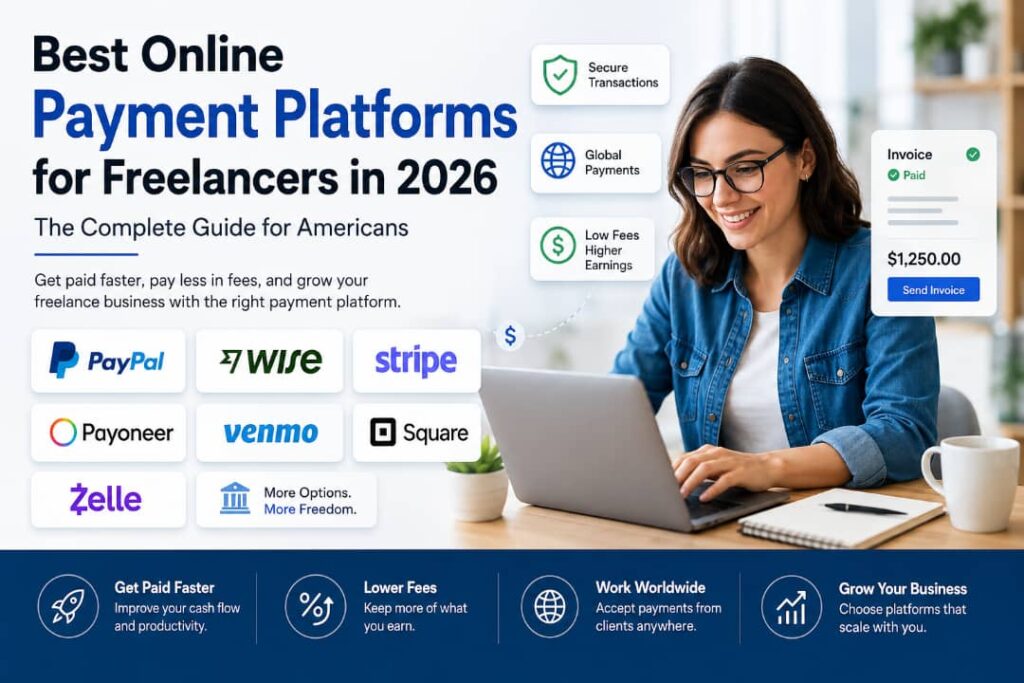
In this guide, we’ll look at the best online payment platforms for freelancers, compare their strengths and weaknesses, and help you decide which one fits your business. We’ll also share a few money-management books that can help you build a stronger and more profitable freelance career.
Why Your Payment Platform Matters More Than You Think
Many freelancers spend most of their time improving their skills, marketing their services, and finding new clients. Those things are important, but the financial side of freelancing deserves just as much attention.
A good payment platform can help you:
- Receive payments quickly
- Reduce unnecessary fees
- Accept international clients
- Create professional invoices
- Improve cash flow
- Keep accurate financial records
- Build trust with clients
One of the key lessons in the classic book Rich Dad Poor Dad by Robert Kiyosaki is that successful business owners pay close attention to cash flow. As a freelancer, you’re running a business, whether you think of it that way or not. Managing how money comes in is just as important as earning it.
1. PayPal
Best for: Freelancers Who Want a Trusted, Widely Accepted Platform
If you’ve been freelancing for any amount of time, you’ve probably heard of PayPal—and for good reason.
It’s one of the most recognized online payment systems in the world. Many clients already have PayPal accounts, which makes it easy to send and receive payments without much setup.
What Makes PayPal Popular?
- Available in many countries
- Supports multiple currencies
- Built-in invoicing tools
- Fast account setup
- Strong brand recognition
What Freelancers Like
PayPal is easy to use, even if you’re completely new to freelancing. Clients trust it, payments are generally fast, and creating invoices takes only a few minutes.
Potential Downsides
The biggest complaint is usually the fees. International transactions and currency conversions can become expensive over time.
Ideal For
- Writers
- Designers
- Virtual assistants
- Marketing professionals
- Beginners entering freelancing
For many new freelancers, PayPal remains one of the easiest ways to start getting paid online.
2. Wise (Formerly TransferWise)
Best for: International Payments and Lower Fees
If you work with overseas clients, Wise deserves serious consideration.
Unlike traditional banks that often hide costs inside poor exchange rates, Wise is known for transparency. You see exactly what you’re paying and exactly what exchange rate you’re getting.
Why Freelancers Love Wise
- Real exchange rates
- Lower international transfer costs
- Multi-currency accounts
- Fast transfers
Advantages
Wise can save freelancers hundreds, or even thousands of dollars annually if they regularly receive payments from abroad.
Disadvantages
It doesn’t offer quite as many business features as some competitors, and some clients may be more familiar with PayPal.
Ideal For
- International freelancers
- Remote consultants
- Digital nomads
- Global contractors
If a significant portion of your income comes from clients outside the United States, Wise is one of the smartest payment tools available today.
3. Stripe
Best for: Freelancers Building Online Businesses
Stripe has evolved from a simple payment processor into a powerful business platform.
It’s especially useful if you sell digital products, offer subscriptions, run membership websites, or want advanced payment automation.
Key Features
- Subscription billing
- Payment automation
- Detailed reporting
- Website integrations
- Strong security
What Stands Out
Stripe gives freelancers room to grow. As your business becomes more sophisticated, Stripe can scale with you.
Possible Drawbacks
The platform can feel overwhelming for beginners. Some of its best features require a little technical knowledge.
Ideal For
- Developers
- Online coaches
- Course creators
- SaaS entrepreneurs
- Digital product sellers
Many successful online entrepreneurs eventually adopt Stripe because it provides tools that go far beyond basic payment processing.
4. Payoneer
Best for: Freelancers Using Global Marketplaces
Payoneer has become a popular choice among freelancers who work through international marketplaces and remote work platforms.
Its global payment infrastructure makes receiving money from businesses around the world relatively straightforward.
Main Benefits
- Multi-currency receiving accounts
- Global payment support
- Marketplace integrations
- Business-friendly features
Pros
Freelancers appreciate Payoneer’s international reach and ability to simplify cross-border payments.
Cons
Depending on how you use the platform, withdrawal fees and transfer charges can add up.
Ideal For
- Freelance agencies
- Marketplace sellers
- Consultants
- International service providers
If your freelance business operates across several countries, Payoneer can be a valuable addition to your financial toolkit.
5. Venmo
Best for: Smaller Domestic Projects
Venmo is incredibly popular in the United States and has become a convenient payment option for many freelancers handling smaller projects.
Why People Use It
- Easy mobile payments
- Fast transfers
- Familiar interface
Advantages
Clients often already have Venmo installed, making payments quick and convenient.
Limitations
Venmo isn’t always the most professional choice for larger projects, and its international capabilities are limited.
Ideal For
- Tutors
- Photographers
- Local freelancers
- Small service businesses
Think of Venmo as a convenient option for straightforward U.S.-based transactions.
6. Square
Best for: Freelancers Who Meet Clients in Person
Not every freelancer works entirely online.
If you offer consulting, photography, coaching, or other services that involve face-to-face interactions, Square can be an excellent solution.
Key Features
- Professional invoicing
- Card payment processing
- Point-of-sale systems
- Business reporting
Benefits
Square makes it easy to accept payments whether you’re online, in an office, or meeting clients at events.
Drawbacks
Transaction fees can reduce margins, especially for smaller projects.
Ideal For
- Coaches
- Consultants
- Event photographers
- Service providers
Square is particularly useful for freelancers who want both online and offline payment capabilities.
7. Zelle
Best for: Fast Bank-to-Bank Transfers
Zelle has quietly become one of the fastest ways for Americans to send money.
Since it’s integrated into many major banks, clients can often pay you directly from their banking app.
Why Freelancers Use Zelle
- Near-instant transfers
- No additional app required for many users
- Direct bank integration
Pros
It’s fast, simple, and convenient.
Cons
Zelle isn’t designed for advanced business needs. Features like invoicing and payment tracking are fairly limited.
Ideal For
- Contractors
- Consultants
- Local freelancers
For straightforward domestic payments, Zelle is hard to beat.
How to Choose the Right Platform
With so many options available, how do you decide?
Start by asking yourself a few simple questions.
Do You Work with International Clients?
Wise and Payoneer are usually excellent choices.
Do You Need Professional Invoices?
PayPal, Stripe, and Square offer robust invoicing tools.
Are You Focused on Keeping Fees Low?
Wise often provides some of the most competitive rates for international transfers.
Do You Sell Digital Products or Memberships?
Stripe is usually the strongest option.
Do Your Clients Prefer Familiar Platforms?
PayPal remains one of the most trusted names in online payments.
Money Books Every Freelancer Should Read
Learning how to earn money is only half the equation. Learning how to manage it is what creates long-term financial success.
Here are some excellent books worth adding to your reading list.
Rich Dad Poor Dad — Robert Kiyosaki
A timeless introduction to financial education and wealth-building principles.
The Millionaire Fastlane — MJ DeMarco
Challenges traditional ideas about wealth and entrepreneurship.
Profit First — Mike Michalowicz
A must-read for freelancers who struggle with budgeting and cash flow.
The Psychology of Money — Morgan Housel
Explains why financial success often depends more on behavior than knowledge.
Your Money or Your Life — Vicki Robin
Offers practical strategies for achieving financial independence.
Atomic Habits — James Clear
Not specifically a finance book, but incredibly useful for building productive business habits.
Common Payment Mistakes Freelancers Make
Even experienced freelancers make mistakes that cost them money.
Some of the most common include:
Relying on Only One Payment Platform
Technical issues happen. Having backup options can prevent payment delays.
Ignoring Fees
Small percentages may seem insignificant at first, but they can add up to thousands of dollars over time.
Poor Record Keeping
Keeping organized financial records will save you countless headaches during tax season.
Mixing Business and Personal Finances
Separate accounts create cleaner bookkeeping and a more professional operation.
Delaying Invoices
The faster you invoice clients, the faster you get paid.
The Future of Freelancer Payments
The world of online payments continues to evolve.
In the coming years, freelancers can expect:
- Faster international transfers
- Smarter AI-powered financial tools
- Automated invoicing systems
- More multi-currency account options
- Better fraud protection
- Improved real-time payment tracking
As remote work becomes increasingly global, freelancers who use efficient payment systems will have a clear advantage.
Final Thoughts
There isn’t a single perfect payment platform for every freelancer.
In reality, many successful freelancers use a combination of tools.
A common setup might look like this:
- PayPal for broad client compatibility
- Wise for international payments
- Stripe for subscriptions and digital products
- Payoneer for marketplace earnings
- Zelle or Venmo for domestic transactions
The best choice depends on your clients, your business model, and your long-term goals.
By selecting the right payment platforms and applying lessons from books like Profit First, The Psychology of Money, and Rich Dad Poor Dad, you can build a freelance business that runs more smoothly, earns more consistently, and grows more sustainably over time.
After all, freelancing isn’t just about finding clients and doing great work. It’s about creating systems that help you get paid efficiently, manage your money wisely, and build a business that supports the life you want.
Frequently Asked Questions:
1. What is the best online payment platform for freelancers in 2026?
The best payment platform depends on your needs. PayPal remains popular because of its worldwide recognition, Wise is excellent for low-cost international transfers, Stripe is ideal for online businesses, and Payoneer works well for freelancers serving global clients. Many freelancers use multiple platforms to maximize flexibility.
2. Which payment platform has the lowest fees for freelancers?
Wise is widely considered one of the most cost-effective options for international payments because it uses real exchange rates and transparent fees. However, actual costs depend on the countries involved and the payment method used.
3. Is PayPal still good for freelancers in 2026?
Yes. PayPal remains one of the most trusted payment systems globally. It offers easy invoicing, broad client acceptance, and support for multiple currencies. However, some freelancers prefer alternatives due to PayPal’s transaction and currency conversion fees.
4. What is the best payment platform for international freelance clients?
Wise and Payoneer are among the best options for freelancers working with international clients. They offer multi-currency support and often provide lower transfer costs than traditional banks.
5. Can freelancers use Stripe without a website?
Yes. While Stripe is commonly integrated into websites, freelancers can use payment links, invoices, and other tools without maintaining a full website.
6. Which payment platform is best for freelance writers?
Freelance writers often prefer PayPal, Wise, or Payoneer because these platforms are widely accepted by international clients and content marketplaces.
7. What payment methods do most American freelancers use?
Many U.S. freelancers use a combination of PayPal, Stripe, Wise, Venmo, Square, and Zelle depending on the type of clients they serve and whether they work domestically or internationally.
8. Are online payment platforms safe for freelancers?
Most major payment providers use advanced encryption, fraud detection, and account security measures. Freelancers should also enable two-factor authentication and use strong passwords to protect their accounts.
9. How do freelancers avoid high payment processing fees?
Freelancers can reduce costs by comparing fee structures, choosing platforms with favorable exchange rates, bundling payments when possible, and selecting payment methods that minimize transaction charges.
10. What is the best alternative to PayPal for freelancers?
Wise, Stripe, and Payoneer are among the strongest PayPal alternatives. Each offers unique benefits depending on whether you prioritize lower fees, automation, or international business capabilities.
11. Can freelancers accept credit card payments?
Yes. Platforms like Stripe, Square, and PayPal allow freelancers to accept major credit and debit cards, making it easier for clients to pay quickly.
12. Should freelancers have more than one payment platform?
Absolutely. Using multiple payment platforms gives clients more options and protects your business if one platform experiences delays, restrictions, or technical issues.
13. What is the best payment platform for beginner freelancers?
PayPal is often the easiest starting point because it is simple to set up and widely recognized by clients around the world.
14. Do freelancers need a business bank account?
While not always required, having a separate business account helps track income, simplify taxes, and maintain professional financial records.
15. How do freelancers get paid faster?
Freelancers can speed up payments by sending invoices immediately, offering multiple payment options, using digital invoicing systems, and clearly communicating payment terms before starting projects.
Disclosure: This article is for informational and educational purposes only and should not be construed as personalized financial advice. Always consult a licensed financial advisor before making investment decisions. This article contains affiliate links.We only recommend books we genuinely believe in.