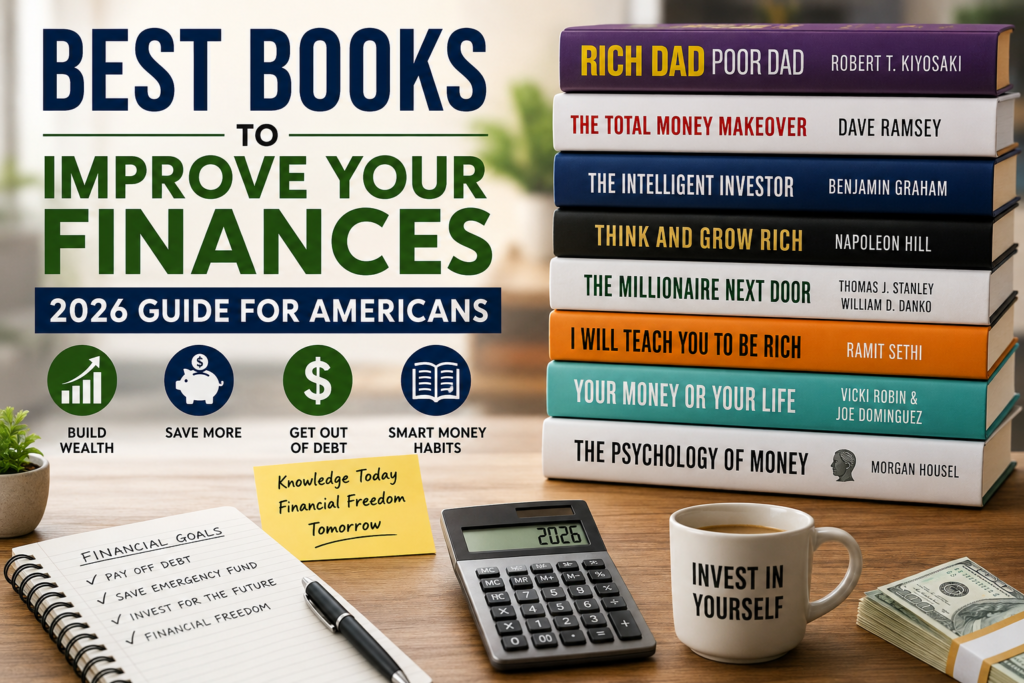
If you want to build wealth, get out of debt, start investing, or just finally understand what’s going on with your money, books are still one of the simplest tools you can use.
And honestly, they’re underrated.
In a world full of TikTok “money hacks,” YouTube shortcuts, and get-rich-quick noise, personal finance books do something different—they slow things down and teach you how money actually works over the long run.
Whether you’re trying to save your first $1,000, pay off student loans, or build a serious investment portfolio in the U.S., the right book can genuinely change how you think and act with money.
Let’s break down some of the best finance books worth your time in 2026.
Why Financial Books Still Matter in 2026
Even with all the finance content online, books still win when it comes to depth.
Here’s why they still matter:
- They teach real financial principles, not short-lived trends
- They help you build habits that stick for years
- They come from people who’ve actually studied or lived wealth-building
- They help you avoid expensive mistakes with debt and investing
Most people don’t fail financially because they lack opportunity—they fail because they never learned the basics properly. Books fix that.
1. Rich Dad Poor Dad – Robert Kiyosaki
This one is almost always the starting point for people getting into personal finance.
It’s not really about technical investing. Basically, it’s more about changing how you think about money.
The core idea is simple but powerful: most people are trained to work for money, but wealthy people learn how to make money work for them.
What stands out:
It pushes you to rethink the difference between assets and liabilities in a way that actually sticks.
Key ideas you’ll walk away with:
- Assets put money in your pocket, liabilities take it out
- Financial education matters just as much as income
- Working a job isn’t enough if you don’t understand money flow
Who it’s for:
If you’re just starting your financial journey and want a mindset shift, this book hits hard in a good way.
2. The Total Money Makeover – Dave Ramsey
If debt is stressing you out—credit cards, student loans, or just bad spending habits—this book is very direct.
No fluff. No complicated theory. Just a clear system.
What it focuses on:
Dave Ramsey basically gives you a step-by-step plan to get out of debt and stay out.
Core lessons:
- Use the “debt snowball” to pay off small debts first
- Start with a small emergency fund ($1,000)
- Avoid debt completely once you’re free
- Give every dollar a job through budgeting
Who it’s for:
If you feel like your money disappears every month, this book gives structure to your chaos.
3. The Intelligent Investor – Benjamin Graham
This is the serious investing book. The kind people mention when they talk about long-term wealth.
It’s not an easy casual read—but it’s worth it.
Why people respect it:
Warren Buffett himself has called Benjamin Graham a major influence, and that alone tells you a lot.
Main ideas:
- Investing is about protecting your downside first
- Don’t follow hype—look for value
- The stock market is emotional, not logical
- Long-term discipline beats short-term excitement
Who it’s for:
If you want to understand investing beyond social media tips, this is your foundation.
4. Think and Grow Rich – Napoleon Hill
This book is less about numbers and more about mindset.
It’s older, yes—but still widely read because of its focus on discipline and goal-setting.
What it teaches:
- Clear goals are non-negotiable if you want wealth
- Persistence often matters more than talent
- Your thinking patterns shape your financial outcomes
- The people you surround yourself with matter more than you think
Who it’s for:
If you need motivation and direction more than technical advice, this one helps reset your mindset.
5. The Millionaire Next Door – Thomas J. Stanley & William D. Danko
This book quietly destroys a lot of myths about wealth in America.
Spoiler: most millionaires don’t look like millionaires.
What makes it interesting:
It’s based on real research into how wealthy Americans actually live.
Key takeaways:
- Most wealthy people live below their means
- Real wealth is built quietly, not loudly
- Income alone doesn’t make you rich
- Consistent saving beats flashy spending
Who it’s for:
If you want a realistic picture of how wealth is actually built, not how it looks on Instagram.
6. I Will Teach You to Be Rich – Ramit Sethi
I Will Teach You to Be Rich
This is a modern, practical, no-guilt approach to money.
It feels less like a lecture and more like someone helping you set up your financial life properly.
What it emphasizes:
- Automating your savings and investments
- Focusing on earning more, not just cutting costs
- Spending money on things you actually enjoy—without guilt
- Optimizing your financial accounts and systems
Who it’s for:
Young professionals or anyone who wants a simpler, automated way to manage money.
7. Your Money or Your Life – Vicki Robin & Joe Dominguez
This book changes how you think about money entirely.
It connects money to your time and energy—something most people never stop to consider.
Key ideas:
- Track every dollar you spend (it gets eye-opening fast)
- Understand your real hourly wage after expenses
- Cut unnecessary spending to gain freedom
- Aim for financial independence, not just income
Who it’s for:
People who want more freedom and less dependency on work.
8. The Psychology of Money – Morgan Housel
This is one of the most relatable modern finance books out there.
It’s not about complicated math—it’s about behavior.
And honestly, behavior is where most people go wrong with money.
What it teaches:
- Wealth is what you don’t see (your savings and investments)
- Emotional decisions can ruin financial plans
- Consistency matters more than perfection
- Time is your most powerful investing tool
Who it’s for:
Anyone who already knows “what to do” but struggles to actually do it.
How to Choose the Right Book for You
If you’re unsure where to start, here’s a simple way to decide:
- Struggling with debt → The Total Money Makeover
- Want a mindset shift → Rich Dad Poor Dad
- Interested in investing → The Intelligent Investor
- Need motivation → Think and Grow Rich
- Want real-world wealth habits → The Millionaire Next Door
- Want a modern system → I Will Teach You to Be Rich
- Want financial freedom thinking → Your Money or Your Life
- Want better money behavior → The Psychology of Money
Final Thoughts
At the end of the day, improving your finances doesn’t start with a sudden salary increase or a lucky investment.
It starts with understanding money better—and then actually changing how you handle it day to day.
These books have helped millions of people in the U.S. Basically, rethink debt, build savings, and invest more confidently. But reading alone isn’t the goal. Simply put, applying even a few ideas consistently is where things start to change.
Pick one book. Start there. Don’t overthink it.
Your financial life builds one decision at a time—and these books just make those decisions a lot smarter
Frequently Asked Questions (FAQs)
1. What are the best books to improve personal finances in 2026?
Some of the best books include:
- Rich Dad Poor Dad
- The Psychology of Money
- The Total Money Makeover
- I Will Teach You to Be Rich
These books are popular in the U.S. because they cover budgeting, investing, debt payoff, and money mindset in a practical way.
2. What is the best book for beginners in personal finance?
If you’re just starting out, a great beginner-friendly book is:
- I Will Teach You to Be Rich
It focuses on simple systems like automating savings, using credit cards wisely, and setting up financial accounts correctly without overwhelming jargon.
3. Which personal finance book is best for getting out of debt?
One of the most recommended books for debt elimination is:
- The Total Money Makeover
It teaches a step-by-step system including the “debt snowball method,” emergency funds, and strict budgeting habits that are widely used in the U.S.
4. What books help change your money mindset?
Books that focus on mindset and financial behavior include:
- Rich Dad Poor Dad
- Think and Grow Rich
- The Psychology of Money
These help you understand how beliefs and habits influence financial success.
5. What is the best investing book for beginners?
A strong foundational investing book is:
- The Intelligent Investor
It teaches long-term investing principles, risk management, and value investing strategies that are still widely used today.
6. Are personal finance books still relevant in 2026?
Yes. Even with YouTube, TikTok, and AI tools, personal finance books remain relevant because they:
- Teach structured financial systems
- Focus on long-term wealth building
- Help avoid emotional money decisions
- Are written by experienced financial experts
Books provide deeper understanding compared to short-form content.
7. What book should I read to become financially independent?
A great choice is:
- Your Money or Your Life
It focuses on reducing unnecessary spending, understanding your real “time value,” and building a path toward financial independence.
8. What is the most popular personal finance book in America?
Some of the most widely read books in the U.S. include:
- Rich Dad Poor Dad
- The Millionaire Next Door
- The Psychology of Money
These books are popular because they are easy to understand and highly practical.
9. Can reading finance books really make me rich?
Reading alone won’t make you rich—but it gives you the foundation to make better financial decisions.
Books teach:
- How to manage money
- How to invest wisely
- How to avoid debt traps
- How to build long-term wealth habits
Wealth comes from applying what you learn, not just reading.
10. How many finance books should I read?
You don’t need dozens. A good approach is:
- Start with 2–3 beginner books
- Apply what you learn
- Then move to investing or advanced books
Quality and application matter more than quantity.