
By staff | Last Updated: June 2026
7-minute read
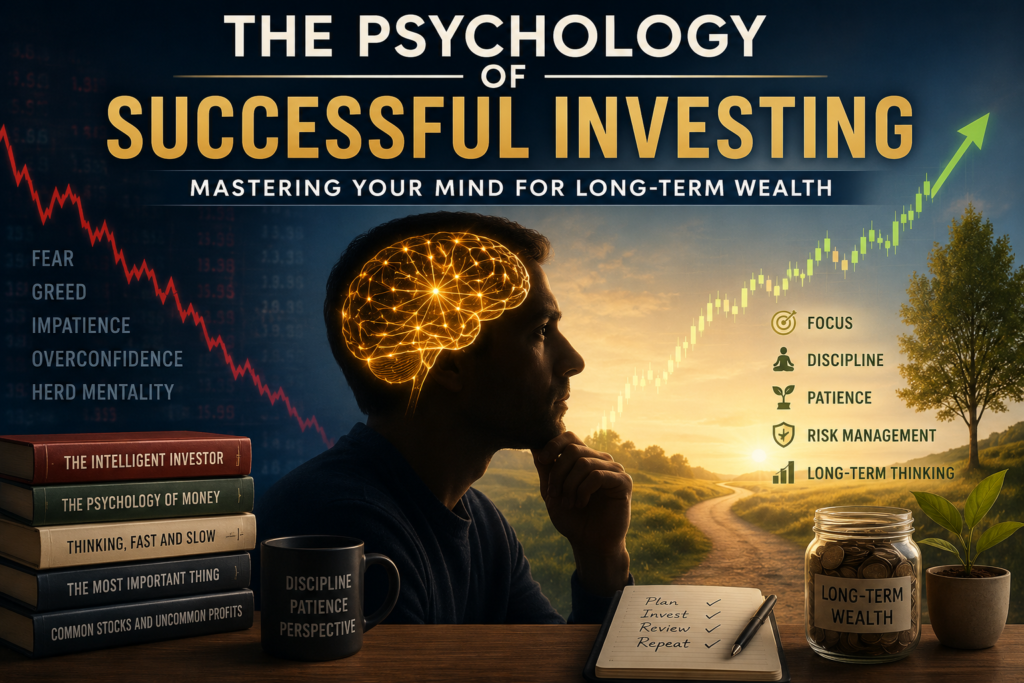
The Secret to Investing Success Isn’t What Most People Think
When most people picture a successful investor, they imagine someone glued to stock charts, analyzing company reports, and making brilliant market predictions.
But here’s the surprising truth: investing success has far less to do with intelligence than most people realize.
In fact, some of the smartest people in the world lose money in the stock market every year. Meanwhile, plenty of ordinary investors quietly build substantial wealth over time without making flashy moves or predicting the next market winner.
What’s the difference?
More often than not, it’s psychology.
The ability to stay calm when others panic. The patience to stick with a plan when everyone else is chasing the latest trend. The discipline to make rational decisions when emotions are running high.
As legendary investor Warren Buffett has often suggested, investing isn’t primarily an IQ test. It’s a test of temperament.
If you can master your emotions, you’ll already be ahead of many investors.
Why Investing Is More Emotional Than We Like to Admit
Most of us believe we’re logical when it comes to money.
Unfortunately, that’s not always true.
The moment our hard-earned savings are involved, emotions tend to take over. Fear, excitement, greed, anxiety, and even pride can influence our decisions in ways we don’t immediately recognize.
This is where the field of behavioral finance becomes incredibly useful.
Behavioral finance studies how psychological biases affect financial decisions. Researchers have discovered that investors frequently act irrationally—even when they know better.
Think about it.
Have you ever felt tempted to buy a stock simply because everyone else seemed to be making money from it?
Or maybe you’ve watched a market decline and felt an overwhelming urge to sell everything?
You’re not alone.
These reactions are part of human nature. The key is learning how to recognize them before they influence your decisions.
The Most Common Psychological Traps Investors Face
- Fear: The Wealth Killer
Fear is one of the strongest emotions in investing.
When markets drop sharply, news headlines become alarming, and social media fills with predictions of doom, it’s easy to panic.
Your brain starts telling you to get out before things get worse.
The problem?
Many investors sell after prices have already fallen, locking in losses that might have been temporary.
History has shown repeatedly that markets recover from downturns. Yet during every major correction, countless investors abandon their long-term plans because fear convinces them that “this time is different.”
Successful investors understand that volatility is normal. They don’t enjoy market declines, but they don’t allow fear to dictate their decisions.
- Greed: Fear’s Opposite Twin
If fear causes investors to sell at the wrong time, greed often causes them to buy at the wrong time.
When a particular stock, industry, or asset class starts soaring, it’s easy to feel like you’re missing out.
Suddenly everyone is talking about it.
Friends are making money. Financial influencers are promoting it. Headlines suggest the opportunity of a lifetime.
That’s when greed quietly enters the picture.
Many investors end up buying after prices have already skyrocketed, only to experience painful losses when reality catches up with hype.
The fear of missing out, commonly known as FOMO, has fueled countless investment bubbles throughout history.
The lesson is simple: just because everyone is excited about an investment doesn’t mean it’s a good opportunity.
- Overconfidence
One of the most dangerous psychological biases is believing we’re smarter than the market.
Many investors assume they can consistently pick winning stocks, time market corrections, or identify trends before everyone else.
The evidence suggests otherwise.
Studies have repeatedly shown that investors who trade frequently often earn lower returns than those who simply stay invested and remain patient.
Successful investors understand that uncertainty is unavoidable. Rather than trying to predict every market move, they focus on making sound decisions and letting time work in their favor.
Humility, surprisingly, can be a powerful investing advantage.
- Confirmation Bias
Human beings naturally seek information that supports their existing beliefs.
Let’s say you become excited about a particular stock.
Without realizing it, you may start reading articles that praise the company while ignoring reports that highlight risks.
This is called confirmation bias.
It feels good because it reinforces what we already believe.
Unfortunately, it can also lead to poor decisions.
Great investors actively search for opposing viewpoints. They want to know what could go wrong, not just what could go right.
That balanced perspective often leads to better investment choices.
- Following the Crowd
Humans are social creatures. We naturally feel safer when we’re doing what everyone else is doing.
In investing, however, crowd behavior can be expensive.
By the time an investment becomes wildly popular, much of the easy money has often already been made.
The most successful investors frequently act differently from the crowd. They remain patient when others are euphoric and stay calm when others panic.
That doesn’t mean being contrarian for the sake of being different. It simply means making decisions based on facts rather than social pressure.
The Power of Thinking Long Term
If there’s one psychological advantage that consistently separates successful investors from unsuccessful ones, it’s patience.
The stock market can be unpredictable over days, weeks, or even months.
But over decades, it has historically rewarded disciplined investors who stay the course.
Unfortunately, we live in a world obsessed with instant results.
We check stock prices every few minutes. Financial news updates arrive around the clock. Social media constantly promotes the next big opportunity.
All of this encourages short-term thinking.
Yet wealth is usually built slowly.
The most successful investors understand that compounding needs time. They aren’t focused on what the market will do next week. They’re focused on where their investments may be years from now.
Five Books That Can Transform Your Investing Mindset
If you want to strengthen your investing psychology, these books deserve a place on your reading list.
The Psychology of Money by Morgan Housel
This modern classic explains why financial success depends more on behavior than intelligence.
Housel’s stories and insights make complex financial concepts easy to understand while highlighting the importance of patience, humility, and consistency.
Thinking, Fast and Slow by Daniel Kahneman
Written by Nobel Prize-winning psychologist Daniel Kahneman, this book explores how our minds make decisions.
It’s one of the best resources for understanding why investors sometimes act irrationally.
The Intelligent Investor by Benjamin Graham
Often considered the greatest investing book ever written, this timeless classic teaches investors how to remain disciplined regardless of market conditions.
Common Stocks and Uncommon Profits by Philip Fisher
Fisher focuses on identifying high-quality businesses and maintaining conviction during market volatility.
The Most Important Thing by Howard Marks
This book offers valuable lessons about risk, market cycles, and investor psychology that remain relevant in every market environment.
Habits Shared by Successful Investors
While investment strategies vary, successful investors often share similar habits.
They Follow a Plan
A written investment plan provides clarity when emotions run high.
Instead of reacting impulsively, they rely on predetermined goals and strategies.
They Invest Consistently
Many investors automate their contributions to retirement and brokerage accounts.
This approach removes emotion from the process and encourages long-term discipline.
They Tune Out the Noise
Successful investors understand that not every headline deserves a reaction.
Most financial news is designed to capture attention, not necessarily improve your investment returns.
They Focus on What They Can Control
No one can control interest rates, inflation, political events, or market corrections.
However, investors can control:
- How much they save
- How much they invest
- Portfolio diversification
- Investment costs
- Their emotional responses
Focusing on these factors often produces better outcomes.
Building Emotional Strength During Market Downturns
Every investor will eventually face market turbulence.
The question isn’t whether it will happen—it’s when.
Preparing mentally in advance can make all the difference.
Keep an emergency fund. Diversify your investments. Understand that volatility is normal.
Most importantly, remember that market declines have occurred throughout history, yet the economy and financial markets have continued to move forward over the long run.
This perspective can help reduce panic when uncertainty appears.
The Real Secret to Building Wealth
Many people spend years searching for the perfect stock, the perfect strategy, or the perfect time to invest.
The reality is often much simpler.
Building wealth usually comes down to a handful of behaviors practiced consistently over time:
- Save regularly.
- Invest consistently.
- Stay diversified.
- Be patient.
- Control your emotions.
- Let compounding do its work.
None of these principles are particularly exciting.
But they work.
And that’s exactly why so many successful investors follow them.
Final Thoughts
The psychology of successful investing is one of the most important yet overlooked aspects of wealth building.
Markets will always fluctuate. Headlines will always create uncertainty. New investment trends will come and go.
Your greatest advantage isn’t predicting the future.
It’s developing the discipline to stay rational when others become emotional.
The investors who build lasting wealth aren’t necessarily the smartest people in the room. They’re often the ones who remain patient, stick to their plan, and refuse to let fear or greed control their decisions.
In the end, successful investing is less about mastering the market and more about mastering yourself.
And that’s a skill that can pay dividends for a lifetime.
Frequently Asked Questions (FAQs)
1. What is the psychology of successful investing?
The psychology of successful investing refers to the mental habits, emotions, and behaviors that influence investment decisions. Successful investors learn how to manage fear, greed, impatience, and overconfidence so they can make rational, long-term financial decisions.
Recommended Book:
- The Psychology of Money by Morgan Housel
2. Why do emotions affect investment decisions?
Money is closely tied to our sense of security and future goals. When markets rise or fall dramatically, emotions can override logic, leading investors to buy high and sell low. Understanding emotional triggers helps investors avoid costly mistakes.
Recommended Book:
- Thinking, Fast and Slow by Daniel Kahneman
3. What are the biggest psychological mistakes investors make?
Some of the most common investing mistakes include:
- Panic selling during market crashes
- Chasing hot stocks
- Overconfidence in stock-picking abilities
- Following the crowd
- Ignoring diversification
Recognizing these behaviors is the first step toward avoiding them.
Recommended Book:
- The Intelligent Investor by Benjamin Graham
4. How can I control fear when the stock market crashes?
Focus on your long-term investment plan rather than short-term market movements. Maintaining a diversified portfolio, keeping an emergency fund, and reviewing historical market recoveries can help reduce fear during downturns.
Recommended Book:
- The Little Book of Common Sense Investing by John C. Bogle
5. What is behavioral finance?
Behavioral finance is the study of how psychological biases and emotions influence financial decisions. It combines insights from psychology and economics to explain why investors often act irrationally.
Recommended Book:
- Misbehaving by Richard H. Thaler
6. Why is patience important in investing?
Patience allows investors to benefit from compound growth over time. Constant buying and selling often leads to higher costs, taxes, and lower returns. Long-term investors generally have a greater chance of achieving their financial goals.
Recommended Book:
- The Psychology of Money by Morgan Housel
7. How do successful investors think differently?
Successful investors focus on long-term outcomes rather than short-term market fluctuations. They follow a disciplined strategy, avoid emotional reactions, and remain committed to their investment goals during both bull and bear markets.
Recommended Book:
- The Most Important Thing by Howard Marks
8. What is investor overconfidence?
Investor overconfidence occurs when people overestimate their ability to predict market movements or select winning investments. This often leads to excessive trading and unnecessary risk-taking.
Recommended Book:
- Thinking, Fast and Slow by Daniel Kahneman
9. How can beginners develop a strong investing mindset?
Beginners can build a strong investing mindset by:
- Learning continuously
- Setting realistic expectations
- Diversifying investments
- Avoiding emotional decisions
- Following a long-term strategy
Recommended Book:
- I Will Teach You to Be Rich by Ramit Sethi
10. Why do investors follow the crowd?
Humans naturally seek social proof. When many people invest in a particular asset, others assume it must be a good opportunity. Unfortunately, herd behavior often causes investors to buy near market peaks and sell during downturns.
Recommended Book:
- Extraordinary Popular Delusions and the Madness of Crowds by Charles Mackay
11. Can psychology really impact investment returns?
Yes. Numerous studies suggest that investor behavior often has a greater impact on returns than investment selection itself. Emotional decisions can reduce long-term performance significantly.
Recommended Book:
- Your Money and Your Brain by Jason Zweig
12. What role does discipline play in successful investing?
Discipline helps investors stick to their strategy during periods of uncertainty. It prevents impulsive decisions and encourages consistent investing habits that support long-term wealth creation.
Recommended Book:
- Atomic Habits by James Clear
Disclosure: This article is for informational and educational purposes only and should not be construed as personalized financial advice. Always consult a licensed financial advisor before making investment decisions. This article contains affiliate links. We only recommend books we genuinely believe in.