
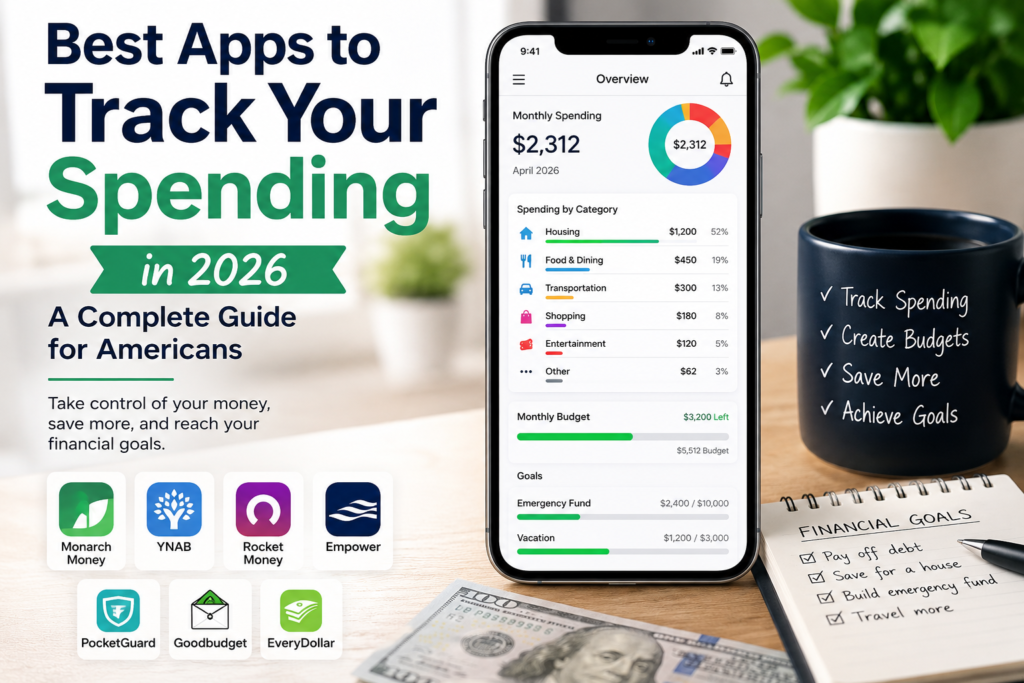
Have you ever checked your bank account at the end of the month and wondered, “Where did all my money go?”
You’re not alone.
Between streaming subscriptions, online shopping, food delivery apps, and the countless small purchases we make every day, it’s surprisingly easy for money to disappear without us noticing. Simply put, in 2026, managing your finances isn’t just about earning more—it’s about understanding your spending habits and making smarter decisions with the money you already have.
Fortunately, technology has made this easier than ever. Modern budgeting and spending-tracking apps can automatically categorize your expenses, monitor subscriptions, create personalized budgets, and even alert you when you’re spending more than planned.
Whether you’re trying to pay off debt, save for a home, build an emergency fund, or simply gain better control of your finances, the right app can make a huge difference.
In this guide, we’ll look at the best spending tracker apps available in 2026, what makes each one unique, and how to choose the right option for your financial goals.
Why Tracking Your Spending Is More Important Than Ever
Most people don’t intentionally waste money.
The problem is that many expenses happen so frequently and conveniently that they become invisible. A coffee here, a takeout order there, another streaming subscription you forgot about—it all adds up faster than most people realize.
That’s why financial experts consistently recommend tracking your spending. Basically, before you can improve your finances, you need a clear picture of where your money is actually going.
When you regularly track your expenses, you can:
- Spot unnecessary spending habits
- Create realistic budgets that actually work
- Reduce financial stress
- Avoid overdraft fees and missed payments
- Save more consistently
- Pay off debt faster
- Invest more for the future
Financial expert Dave Ramsey often says that every dollar should have a purpose. Likewise, Ramit Sethi, author of the bestselling book I Will Teach You to Be Rich, emphasizes that awareness and automation are two of the most powerful tools for building wealth.
In other words, the more visibility you have into your finances, the better decisions you’ll make.
What Should You Look for in a Spending Tracker App?
Not all budgeting apps are created equal.
Some are designed for hardcore budgeters who want detailed reports and advanced planning tools. Others focus on simplicity and automation.
Here are some of the features worth looking for:
Automatic Expense Tracking
The best apps connect directly to your bank accounts and credit cards, automatically importing transactions so you don’t have to enter everything manually.
Budgeting Tools
A good spending tracker should help you create spending limits for categories like groceries, transportation, entertainment, and dining out.
Subscription Monitoring
With Americans spending hundreds of dollars each year on forgotten subscriptions, this feature has become increasingly valuable.
Savings Goals
Whether you’re saving for a vacation, a new car, or retirement, goal-tracking features can help keep you motivated.
Investment Tracking
Some apps go beyond budgeting and allow you to monitor your investment accounts and overall net worth.
Strong Security
Because you’ll be linking financial accounts, look for apps that offer bank-level encryption and multi-factor authentication.
Now let’s dive into the apps that stand out in 2026.
1. Monarch Money
Best Overall Spending Tracker
If you’re looking for a complete financial management platform, Monarch Money is hard to beat.
Rather than focusing solely on budgeting, Monarch gives users a full picture of their financial lives. It combines expense tracking, budgeting, goal planning, net worth monitoring, and investment tracking in one easy-to-use dashboard.
Many users appreciate the clean design and detailed financial insights, making it a popular choice among professionals and families alike.
Highlights
- Automatic expense tracking
- Custom budgeting categories
- Investment monitoring
- Net worth tracking
- Subscription management
- Shared financial planning for households
Best For
People who want a comprehensive money management solution instead of a simple budgeting app.
2. YNAB (You Need A Budget)
Best for Serious Budgeters
YNAB has built a loyal following over the years—and for good reason.
Its budgeting philosophy is based on a simple concept: give every dollar a specific job.
Instead of looking backward at what you’ve already spent, YNAB encourages users to plan ahead and intentionally allocate money before spending it.
The approach takes some time to learn, but many users swear by it.
Highlights
- Zero-based budgeting
- Debt payoff tools
- Savings goal tracking
- Detailed spending reports
- Extensive educational resources
Best For
People who are serious about changing their financial habits and creating a long-term budgeting system.
3. Rocket Money
Best for Managing Subscriptions
If you’ve ever discovered you’re still paying for a subscription you haven’t used in months, Rocket Money may be exactly what you need.
The app specializes in identifying recurring charges and helping users remove unnecessary subscriptions.
Beyond subscription tracking, it also offers budgeting tools, spending reports, and bill negotiation services.
Highlights
- Subscription management
- Budget tracking
- Spending categorization
- Credit monitoring
- Bill negotiation assistance
Best For
People who want to reduce monthly expenses and remove wasteful recurring charges.
4. Empower Personal Dashboard
Best Free Spending Tracker
For those looking for a powerful free option, Empower remains one of the strongest choices available.
Originally known as Personal Capital, Empower combines spending analysis with sophisticated investment and retirement planning tools.
It’s particularly useful for people who want to monitor both their daily finances and long-term wealth-building progress.
Highlights
- Spending tracking
- Cash flow analysis
- Retirement planning tools
- Investment monitoring
- Net worth calculations
Best For
Investors and long-term planners who want more than just a budgeting app.
5. PocketGuard
Best for Simplicity
Some budgeting apps can feel overwhelming.
PocketGuard takes the opposite approach by focusing on one simple question:
How much money can you safely spend right now?
The app calculates your available spending money after accounting for bills, savings goals, and recurring expenses.
Highlights
- Easy setup
- Spending categorization
- Budget tracking
- Savings monitoring
Best For
Beginners who want a straightforward and easy-to-understand budgeting tool.
6. Goodbudget
Best Envelope Budgeting App
Goodbudget modernizes the classic envelope budgeting method.
Instead of using physical cash envelopes, users assign money to digital spending categories.
This hands-on approach encourages intentional spending and greater awareness of financial decisions.
Highlights
- Digital envelope budgeting
- Goal tracking
- Debt management tools
- Shared household budgeting
Best For
People who prefer a more active role in managing their finances.
7. EveryDollar
Best for Dave Ramsey Fans
Built around Dave Ramsey’s budgeting principles, EveryDollar helps users create monthly budgets and track spending against those plans.
Its clean interface makes budgeting relatively simple, even for beginners.
Highlights
- Monthly budget creation
- Expense tracking
- Financial goal planning
- Debt payoff tools
Best For
Users following Dave Ramsey’s Baby Steps approach to personal finance.
Financial Books That Pair Perfectly With Spending Apps
Budgeting apps provide the tools, but financial knowledge provides the strategy.
These books complement spending tracker apps and provide valuable financial education for readers looking to improve their money management skills.
1. I Will Teach You to Be Rich by Ramit Sethi
Best For: Budgeting, automation, saving, and investing.
This practical guide teaches readers how to automate finances, eliminate unnecessary expenses, and build long-term wealth.
2. The Psychology of Money by Morgan Housel
Best For: Understanding financial behavior.
The book explores why people make financial decisions and how mindset influences wealth-building success.
3. The Total Money Makeover by Dave Ramsey
Best For: Debt elimination and financial discipline.
A step-by-step plan for paying off debt and creating a stronger financial foundation.
4. Your Money or Your Life by Vicki Robin and Joe Dominguez
Best For: Aligning spending with personal values.
A classic book that encourages readers to think differently about money and life satisfaction.
5. The Millionaire Next Door by Thomas J. Stanley and William D. Danko
Best For: Learning how ordinary Americans build wealth.
The authors reveal common habits shared by self-made millionaires.
6. The Simple Path to Wealth by J. L. Collins
Best For: Beginner investing and financial independence.
A straightforward guide to building wealth through simple long-term investing strategies.
7. Rich Dad Poor Dad by Robert Kiyosaki
Best For: Financial mindset and wealth-building concepts.
One of the most widely read personal finance books of all time.
8. The Automatic Millionaire by David Bach
Best For: Automating savings and investments.
Demonstrates how small, consistent financial habits can lead to substantial wealth over time.
Tips for Getting Better Results From Spending Apps
Downloading an app is easy.
Using it consistently is what creates results.
Here are a few simple habits that can make a big difference:
- Review transactions once a week.
- Set realistic spending limits.
- Track progress toward savings goals.
- Audit subscriptions regularly.
- Compare monthly spending trends.
- Celebrate financial milestones.
Small improvements made consistently often lead to big financial progress over time.
Where Most Americans Overspend
Many spending tracker users are surprised by how much money goes toward:
- Restaurant meals
- Coffee and snacks
- Streaming subscriptions
- Online shopping
- Food delivery services
- Convenience purchases
- Impulse buys
The good news is that identifying these spending patterns is often the first step toward changing them.
The Future of Spending Tracker Apps
Artificial intelligence is rapidly changing the personal finance landscape.
Many modern apps now offer:
- AI-powered spending insights
- Personalized financial recommendations
- Predictive budgeting
- Automated savings suggestions
- Real-time spending alerts
- Financial coaching tools
As these technologies continue to improve, managing money is likely to become even more automated and personalized.
Final Thoughts
At the end of the day, the best spending tracker app is the one you’ll actually use consistently.
For many Americans, Monarch Money offers the most complete solution. Simply put, yNAB remains a favorite among budgeting enthusiasts, while Empower shines for investors. As it turns out, rocket Money is particularly useful for anyone trying to cut unnecessary subscriptions and lower monthly expenses.
No matter which app you choose, tracking your spending is one of the simplest and most effective ways to improve your financial health. Pair that habit with sound financial education and a commitment to long-term goals, and you’ll be well on your way to making smarter money decisions in 2026 and beyond.
Because financial success isn’t just about how much you earn—it’s about how intentionally you manage every dollar you have.
Frequently Asked Questions (FAQs) About Spending Tracker Apps in 2026
1. What is a spending tracker app?
A spending tracker app is a mobile or web application that helps users monitor where their money goes. Most apps automatically connect to bank accounts and credit cards, categorize transactions, and provide insights into spending habits.
2. Why should I use a spending tracker app?
A spending tracker app can help you understand your financial habits, create realistic budgets, reduce unnecessary expenses, increase savings, and make smarter financial decisions.
3. Are spending tracker apps safe to use?
Most reputable spending tracker apps use bank-level encryption, secure servers, and multi-factor authentication to protect user data. Always choose apps with strong security features and positive user reviews.
4. What is the best spending tracker app in 2026?
The best app depends on your goals. Monarch Money is often considered one of the best overall solutions, while YNAB is popular for budgeting, Rocket Money excels at subscription management, and Empower is a strong free option for investors.
5. Can spending tracker apps help me save money?
Yes. By identifying unnecessary expenses, forgotten subscriptions, and spending patterns, these apps can help users cut costs and increase savings over time.
6. Do spending tracker apps connect to my bank account?
Most modern spending tracker apps securely connect to bank accounts, credit cards, and investment accounts to automatically import transactions and provide real-time financial insights.
7. Are there any free spending tracker apps available?
Yes. Several apps offer free versions, including Empower, Rocket Money, PocketGuard, Goodbudget, and EveryDollar. Some premium features may require a subscription.
8. Which spending tracker app is best for beginners?
PocketGuard and EveryDollar are often recommended for beginners because of their simple interfaces and easy-to-understand budgeting systems.
9. What is zero-based budgeting?
Zero-based budgeting is a budgeting method where every dollar of income is assigned a specific purpose. YNAB and EveryDollar are popular apps that support this budgeting style.
10. Can spending tracker apps help me pay off debt?
Absolutely. Many apps include debt-tracking tools, repayment calculators, and budgeting features that help users allocate more money toward debt reduction.
11. Which app is best for tracking subscriptions?
Rocket Money is widely regarded as one of the best apps for identifying recurring charges and helping users manage or cancel unwanted subscriptions.
12. Do spending tracker apps work with investment accounts?
Some do. Monarch Money and Empower allow users to connect investment accounts and monitor net worth alongside daily spending.
13. How often should I review my spending?
Financial experts recommend reviewing transactions at least once per week and conducting a more detailed review at the end of each month.
14. Can couples use spending tracker apps together?
Yes. Many apps, including Monarch Money and Goodbudget, offer features designed for households and couples who want to manage finances collaboratively.
15. Are spending tracker apps worth paying for?
If the app helps you save money, reduce debt, or improve financial habits, the subscription cost can often pay for itself through better financial management.
16. What expenses do people most commonly overlook?
Many Americans underestimate spending on dining out, coffee purchases, streaming services, food delivery apps, online shopping, and recurring subscriptions.
17. Can spending tracker apps improve my credit score?
While most apps do not directly improve credit scores, they can help users make timely payments, reduce debt, and maintain healthier financial habits that may positively affect credit over time.
18. What’s the difference between budgeting apps and spending tracker apps?
Spending tracker apps focus on monitoring expenses, while budgeting apps help users plan how they intend to spend money. Many modern apps combine both functions.
19. How do AI-powered spending tracker apps work?
AI-powered apps analyze transaction history, identify spending patterns, offer personalized recommendations, predict future expenses, and suggest ways to save money.
20. What should I look for when choosing a spending tracker app?
Look for automatic transaction syncing, budgeting tools, security features, subscription monitoring, goal tracking, investment integration, and a user-friendly interface.