
By staff | Last Updated: June 2026
7-minute read
If you’re new to investing, you’ve probably seen those stories online about people turning a few hundred dollars into life-changing wealth. You’ve also likely come across flashy ads promising “guaranteed returns,” “easy passive income,” or the next stock that’s supposedly going to explode overnight.
And honestly? That kind of hype can make investing feel exciting, but also incredibly confusing.
The reality is much simpler.
Successful investing is usually slow, steady, and sometimes even a little boring. It’s not about getting rich overnight. It’s about building wealth patiently over time while avoiding the mistakes that wipe out beginners.
The good news is that you don’t need to be a financial genius to become a successful investor in America today. You simply need good habits, emotional discipline, and a basic understanding of what not to do.
In fact, avoiding common investing mistakes is often more important than finding the “perfect” stock.
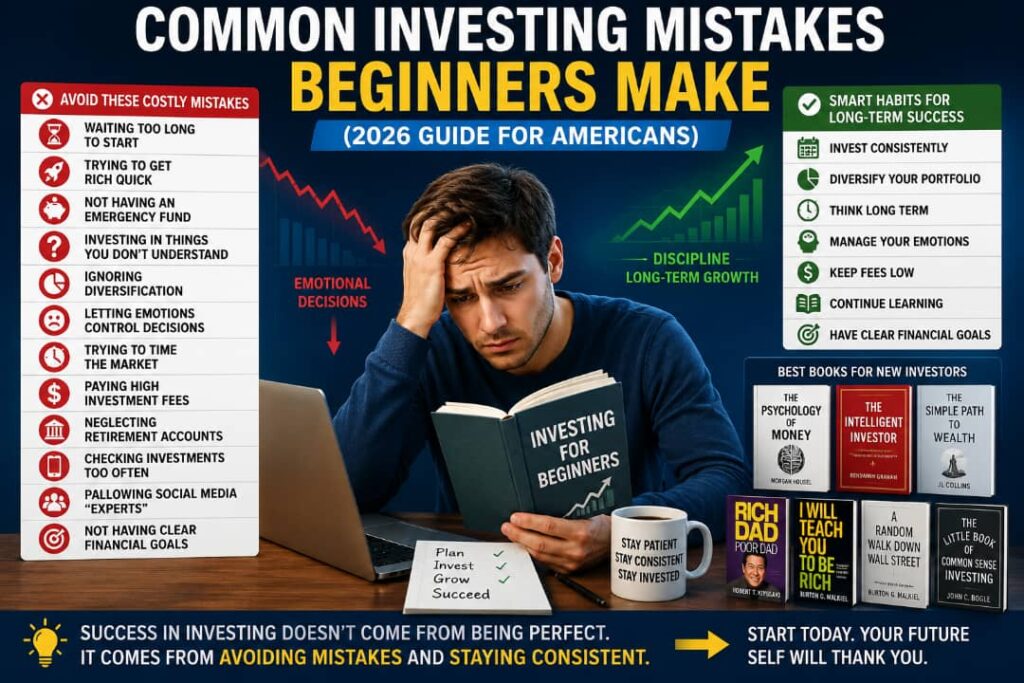
Whether you’re using a 401(k), Roth IRA, investing app, or brokerage account, this guide will help you avoid the traps that derail many beginner investors in 2026.
Why So Many Beginner Investors Lose Money
Most beginners don’t lose money because they’re unintelligent.
They lose money because they invest emotionally.
Social media, financial influencers, YouTube “gurus,” meme stocks, and fear of missing out (FOMO) push people into making rushed decisions instead of smart long-term choices.
Legendary investor Warren Buffett once explained that investing success isn’t really about having a super high IQ. It’s more about patience, consistency, and controlling your emotions.
That idea is also heavily discussed in The Psychology of Money, one of the best personal finance books for beginners. The book explains that behavior matters more than intelligence when it comes to building wealth.
And that’s exactly why learning these mistakes early can save you thousands of dollars later.
1. Waiting Too Long to Start Investing
One of the most common mistakes beginners make is thinking they need a lot of money before they can invest.
A lot of Americans tell themselves:
- “I’ll start when I earn more.”
- “I need at least $10,000 first.”
- “Investing is only for rich people.”
But that’s no longer true.
In 2026, many investing apps allow you to start with as little as $5 thanks to fractional shares and low-cost index funds.
The biggest advantage in investing isn’t having a huge amount of money—it’s having time.
The earlier you start, the more compound interest can work in your favor.
For example, a 25-year-old American investing just $200 monthly into an S&P 500 index fund could potentially build substantial wealth by retirement simply by staying consistent.
One excellent beginner-friendly book on this topic is The Simple Path to Wealth.
2. Trying to Get Rich Quick
This is where many beginners get into trouble.
Instead of focusing on long-term investing, they chase:
- Meme stocks
- Penny stocks
- Viral crypto coins
- TikTok stock tips
- “Secret” investing systems
The dream of becoming rich fast is tempting. But in reality, most of these strategies end badly.
Long-term investing works because of patience—not gambling.
Historically, the U.S. stock market has rewarded disciplined investors who stay invested for years, not people constantly jumping from trend to trend.
That’s one reason The Intelligent Investor is still considered one of the greatest investing books ever written. It teaches investors to focus on value, discipline, and long-term thinking.
If something sounds too good to be true financially, it usually is.
3. Investing Without an Emergency Fund
Many beginners rush into investing before building basic financial security.
That becomes a problem when life happens.
Unexpected expenses show up all the time:
- Medical bills
- Car repairs
- Job loss
- Rent increases
- Family emergencies
Without emergency savings, people often panic and sell investments during bad market conditions just to survive financially.
That’s why financial experts usually recommend saving at least 3–6 months of living expenses before investing aggressively.
Having an emergency fund creates peace of mind and helps you avoid emotional investing decisions.
A great personal finance book for this topic is I Will Teach You to Be Rich.
4. Investing in Things You Don’t Understand
A lot of beginner investors buy stocks simply because:
- A friend recommended them
- A YouTuber hyped them up
- Social media says they’re “the future”
- Everyone online seems excited about them
That’s dangerous.
Before investing in anything, you should understand:
- How the business makes money
- Whether the company is profitable
- Its competition
- Debt levels
- Long-term growth potential
Famous investor Peter Lynch once said:
“Never invest in an idea you can’t illustrate with a crayon.”
In other words: if you can’t explain it simply, you probably shouldn’t invest in it yet.
For beginners, simple investments like index funds are often smarter than chasing complicated trends.
5. Ignoring Diversification
Putting all your money into one stock or one investment is extremely risky.
If that investment fails, your portfolio can collapse quickly.
Diversification simply means spreading your money across different investments to reduce risk.
That can include:
- Stocks
- ETFs
- Bonds
- Real estate
- Different industries
One of the easiest ways Americans diversify today is through index funds that track large portions of the market.
Popular beginner-friendly options include:
- S&P 500 index funds
- Total stock market funds
- Target-date retirement funds
A fantastic book that explains diversification well is A Random Walk Down Wall Street.
6. As it turns out, letting Emotions Control Decisions
This mistake destroys more portfolios than almost anything else.
When the market crashes, beginners panic and sell.
When prices skyrocket, they get greedy and buy at the top.
Successful investors usually do the opposite:
- They stay calm during downturns
- They continue investing consistently
- They avoid emotional reactions
The truth is that market volatility is normal.
The U.S. stock market has survived recessions, crashes, inflation, and financial crises for decades—and historically, it has continued growing over the long term.
That’s why emotional discipline matters so much.
One of the strongest lessons from The Psychology of Money is that controlling your emotions is often more important than choosing the perfect investment.
7. Trying to Time the Market
Many beginners believe they can predict:
- The next market crash
- The perfect time to buy
- The perfect time to sell
The problem? Even professional investors struggle to do this consistently.
Trying to “beat the market” often leads to buying high and selling low.
Instead, many experts recommend dollar-cost averaging—investing a fixed amount regularly regardless of market conditions.
This strategy reduces emotional decision-making and helps investors stay consistent.
8. Paying High Investment Fees
Investment fees may seem small, but over time they quietly eat away at your wealth.
Many beginners don’t realize they’re paying:
- High mutual fund fees
- Advisor commissions
- Trading fees
- Large expense ratios
Even a 1–2% yearly fee can cost you tens of thousands of dollars over several decades.
That’s why low-cost investing has become extremely popular in America.
Index funds and ETFs often have far lower fees than actively managed funds.
John C. Bogle strongly promoted low-cost investing for everyday Americans.
His book, The Little Book of Common Sense Investing, remains one of the best beginner investing resources available.
9. Ignoring Retirement Accounts
Many Americans miss out on huge tax advantages simply because they don’t understand retirement accounts.
Some of the most powerful wealth-building tools include:
- 401(k)
- Roth IRA
- Traditional IRA
- HSA accounts
These accounts can dramatically increase long-term growth through tax benefits.
For example:
Employer 401(k) matching is basically free money
- Roth IRA withdrawals can be tax-free in retirement
Learning how these accounts work early can make a massive difference later in life.
10. Checking Investments Every Day
This is incredibly common among beginners.
People constantly refresh investing apps and panic over daily price changes.
But short-term market movements are normal.
Long-term investors focus on:
- Years
- Decades
- Consistency
—not daily fluctuations.
Wealth-building usually happens slowly and quietly over time.
One of the major lessons from The Millionaire Next Door is that most wealthy people build money steadily—not through flashy investing moves.
11. Following Social Media “Experts”
In 2026, investing advice is everywhere:
- TikTok
- YouTube
- X (formerly Twitter)
Some creators genuinely educate people.
Others are simply chasing views, clicks, or affiliate commissions.
Be cautious of:
- Guaranteed profit promises
- “Secret” investment systems
- Unrealistic return claims
- Pump-and-dump schemes
Reliable financial education is far more valuable than viral investing trends.
12. Investing Without Clear Goals
One overlooked mistake is investing without knowing why you’re investing.
Ask yourself:
- Are you saving for retirement?
- A house?
- Financial freedom?
- Passive income?
- College tuition?
Your goals determine:
- Your risk tolerance
- Investment strategy
- Time horizon
- Portfolio structure
Someone investing for retirement in 30 years will likely invest differently than someone saving for a home in two years.
Clear goals lead to smarter decisions.
Smart Habits Every Beginner Investor Should Build
Successful investing usually comes down to simple habits repeated consistently over time.
Good investing habits include:
- Investing regularly
- Staying diversified
- Thinking long term
- Avoiding emotional decisions
- Reading financial books
- Keeping investment fees low
- Continuing to learn
Small habits today can create massive financial results later.
Best Investing Books for Beginners in 2026
If you want to become a smarter investor, these books are excellent places to start:
These are also excellent affiliate marketing opportunities because they solve real problems beginner investors face every day.
Final Thoughts
The truth is that beginner investors don’t need to find the next hot stock to build wealth.
Most long-term success comes from avoiding costly mistakes:
- Starting too late
- Investing emotionally
- Chasing hype
- Ignoring diversification
- Paying high fees
- Trying to get rich quickly
The Americans who build lasting wealth are usually the ones who stay patient, continue learning, and invest consistently over time.
Investing isn’t really about perfection.
It’s about discipline, patience, and staying in the game long enough for compound growth to do its work.
Frequently Asked Questions (FAQs)
1. What is the biggest investing mistake beginners make?
One of the biggest mistakes beginner investors make is waiting too long to start. Many Americans think they need thousands of dollars before investing, but thanks to fractional shares and index funds, you can start with very little money. The earlier you begin, the more time compound growth has to work in your favor.
A great beginner-friendly resource is The Simple Path to Wealth, which explains long-term investing in a simple and practical way.
2. Can I start investing with only $100?
Yes, absolutely. Many investing platforms in the U.S. allow beginners to start with as little as $5–$100. The key is consistency, not starting with a huge amount.
Many beginner investors choose low-cost index funds or ETFs because they offer diversification and lower risk compared to buying individual stocks.
A recommended beginner book is I Will Teach You to Be Rich.
3. Why do so many beginner investors lose money?
Most beginners lose money because they invest emotionally instead of strategically. Fear, greed, hype, and social media trends often lead people to buy high and sell low.
Learning emotional discipline is one of the most important investing skills. That’s one reason The Psychology of Money has become one of the most popular investing books in America.
4. Is investing in meme stocks a bad idea?
Meme stocks can be extremely risky for beginners because their prices are often driven by hype instead of business fundamentals.
While some investors make quick profits, many others lose money chasing trends too late. Long-term investing strategies are usually safer and more sustainable for building wealth.
For learning value investing principles, many beginners read The Intelligent Investor.
5. What is diversification in investing?
Diversification means spreading your money across different investments to reduce risk.
Instead of putting all your money into one stock, diversified investors spread investments across:
- Stocks
- ETFs
- Bonds
- Real estate
- Different industries
Many Americans use S&P 500 index funds because they automatically provide diversification.
A helpful beginner resource is A Random Walk Down Wall Street.
6. Should beginners invest in individual stocks or index funds?
For many beginners, index funds are often considered safer and easier because they spread risk across many companies.
Individual stocks can offer higher returns, but they also carry higher risk and require more research.
That’s why beginner investors often start with low-cost index funds before moving into individual stock investing.
7. What is dollar-cost averaging?
Dollar-cost averaging means investing a fixed amount of money regularly regardless of market conditions.
For example, investing $100 every month into an index fund can help reduce emotional decision-making and market timing mistakes.
This strategy is popular because it helps investors stay consistent during both market highs and market crashes.
8. How much should beginners invest every month?
The best amount is whatever you can consistently afford after covering:
- Bills
- Emergency savings
- Debt payments
- Basic living expenses
Even small monthly investments can grow significantly over time thanks to compound growth.
The most important habit is consistency—not perfection.
9. What is the safest investment for beginners?
No investment is completely risk-free, but many financial experts consider diversified index funds among the safer long-term investment options for beginners.
Examples include:
- S&P 500 index funds
- Total stock market funds
- Target-date retirement funds
These investments reduce risk by spreading money across many companies.
10. Why is emotional investing dangerous?
Emotional investing causes people to panic during market crashes and become greedy during market rallies.
This often leads to buying high and selling low—the exact opposite of successful investing behavior.
One major lesson from The Psychology of Money is that emotional control is often more important than investment knowledge.
11. What are the best investing books for beginners?
Some of the best investing books for Americans in 2026 include:
12. Should beginners invest during a market crash?
Many experienced investors continue investing during market downturns because stock prices are often lower.
Historically, the U.S. stock market has recovered from major crashes over time. However, beginners should invest according to their financial goals and risk tolerance.
Long-term investing usually performs better than panic selling.
13. How important is an emergency fund before investing?
An emergency fund is extremely important because it helps protect investors from unexpected financial problems.
Without emergency savings, people may be forced to sell investments during bad market conditions to cover expenses.
Most financial experts recommend saving 3–6 months of living expenses before aggressively investing.
14. What is a Roth IRA and why do beginners use it?
A Roth IRA is a retirement account that allows Americans to invest after-tax money and potentially withdraw it tax-free during retirement.
Many beginners like Roth IRAs because:
- Investments grow tax-free
- Qualified withdrawals are tax-free
- It encourages long-term investing
It’s considered one of the best retirement tools available for younger Americans.
15. How can beginners avoid investment scams?
Beginners can protect themselves by avoiding:
- Guaranteed profit claims
- “Secret” investing systems
- Pressure to invest quickly
- Unrealistic returns
- Social media hype
Always research investments carefully and learn from trusted educational resources instead of relying solely on influencers online.
16. Is it too late to start investing in your 30s or 40s?
No—it’s never too late to start investing.
While starting earlier gives compound growth more time, Americans in their 30s, 40s, and even 50s can still build meaningful wealth through consistent investing and smart financial habits.
The important thing is starting as soon as possible.
17. Why do investment fees matter so much?
Investment fees reduce your long-term returns over time.
Even small annual fees can cost investors thousands—or even hundreds of thousands—of dollars over several decades.
That’s why many investors prefer low-cost index funds and ETFs.
John C. Bogle strongly advocated low-fee investing for everyday Americans.
18. What investing apps are popular among beginners in America?
Many beginners use investing apps because they’re easy to use and allow small investments.
Popular beginner-friendly investing platforms often include:
- Robinhood
- Fidelity
- Charles Schwab
- Vanguard
- Webull
Before choosing a platform, beginners should compare:
- Fees
- Investment options
- Retirement account availability
- Educational tools
19. How long should beginners hold investments?
Successful investing is usually long-term.
Many experienced investors hold investments for:
- Years
- Decades
- Retirement
Constantly buying and selling can increase emotional mistakes and reduce long-term growth potential.
Patience is one of the most powerful investing tools.
20. What’s the smartest investing habit beginners can build?
Consistency.
Investing regularly, continuing financial education, staying patient, and avoiding emotional decisions are habits that often separate successful investors from unsuccessful ones.
Small, consistent actions repeated over many years can create enormous financial growth over time.
Disclosure: This article is for informational and educational purposes only and should not be construed as personalized financial advice. Always consult a licensed financial advisor before making investment decisions. This article contains affiliate links.We only recommend books we genuinely believe in.