
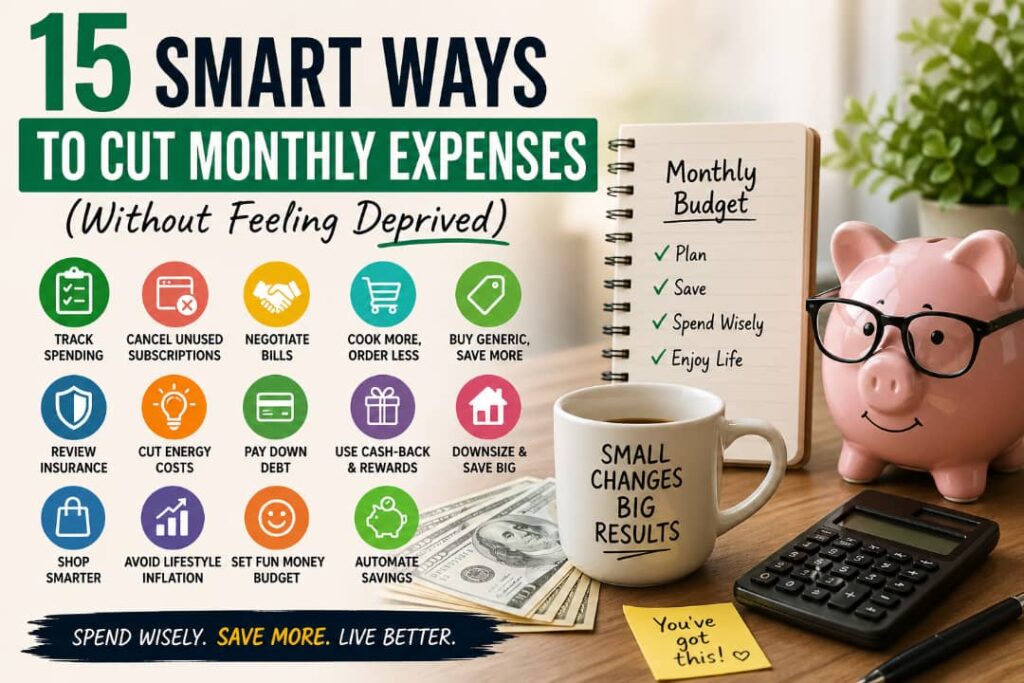
A practical, real-life guide for Americans in 2026
Let’s be real for a second.
When people hear “cut expenses,” it sounds like a boring, restrictive life—no fun, no eating out, no enjoying your money. Basically… suffering.
But that’s not what smart money management looks like.
People who are good with money don’t deprive themselves—they just make better decisions about where their money goes. They spend on what matters and quietly cut what doesn’t.
And if you’ve been feeling the pressure lately—higher rent, groceries getting ridiculous, everything costing more—you’re not alone. Simply put, a lot of Americans are trying to figure out how to breathe financially again.
The good news? You don’t need to become extreme or cheap. Simply put, you just need a smarter approach.
Let’s walk through 15 real, practical ways to cut your monthly expenses—without feeling like you’re punishing yourself.
1. Track Your Money (Even If It Feels Annoying at First)
Here’s the truth: you can’t fix what you don’t see.
Most people think they know where their money goes… until they actually track it. That’s when the surprises show up—random subscriptions, extra takeout, impulse buys.
This idea comes straight from Your Money or Your Life—the idea that your money is your life energy, and you should know exactly where it’s going.
Simple move:
Track everything for 30 days. No judgment—just awareness.
You’ll immediately spot where your money is quietly leaking.
2. Cancel the Stuff You Don’t Even Use
Subscriptions are sneaky.
You sign up for a free trial… forget about it… and suddenly you’re paying $10, $15, $20 every month for things you barely touch.
It doesn’t feel like much—but stack a few of those, and it adds up fast.
Quick win:
Check your bank statement and cancel anything you haven’t used recently.
Easy money back in your pocket.
3. Ask for Lower Bills (Seriously)
A lot of people don’t do this because it feels awkward.
But here’s the reality: companies expect it.
Your internet, phone plan, even some medical bills—you can often negotiate them down.
This is something I Will Teach You to Be Rich talks about a lot—treating negotiation like a normal life skill.
Try this line:
“Hi, I’m reviewing my budget and thinking of switching. As it turns out, are there any discounts or offers available?”
That one sentence can save you real money.
4. Cook More (But Don’t Go Extreme)
You don’t have to stop eating out.
But if you’re ordering food several times a week, that’s one of the fastest ways your money disappears.
Better approach:
- Cook most days
- Keep eating out as something you enjoy, not default
You still enjoy life—but you stop overspending without realizing it.
5. Stop Paying Extra for Brand Names
This one is simple but powerful.
A lot of generic products are basically the same as brand-name ones—just cheaper.
Groceries, medicine, household items… you can save a lot without changing your lifestyle at all.
No sacrifice—just smarter choices.
6. Check Your Insurance (Most People Overpay)
Insurance is one of those things people set… and forget.
Big mistake.
Rates change, and companies rarely lower your price unless you push for it.
What to do:
- Compare quotes once a year
- Bundle policies if possible
- Adjust your deductible if it makes sense
You could be overpaying without realizing it.
7. Pause Before You Buy (The 24-Hour Rule)
Impulse spending is dangerous because it feels harmless.
You see something, you want it, you buy it.
Done.
But those quick decisions add up fast.
Simple trick:
Wait 24 hours before buying anything non-essential.
This idea is strongly emphasized in The Total Money Makeover—building discipline around spending.
You’ll be surprised how often the urge disappears.
8. Lower Your Utility Bills Without Trying Too Hard
You don’t need to live in the dark to save money on electricity.
Just make small adjustments:
- Turn things off when not in use
- Use energy-efficient bulbs
- Adjust your thermostat slightly
These tiny changes quietly reduce your bills every month.
9. Deal With High-Interest Debt Early
Debt is expensive—especially high-interest debt.
If you ignore it, it keeps growing in the background.
Better options:
- Consolidate
- Refinance
- Transfer to lower-interest options
Even a small reduction in interest can save you a lot over time.
10. Get Rewards for Spending You Already Do
If you’re spending money anyway, you might as well get something back.
Cash-back cards, rewards apps, discounts—they add up.
But here’s the rule:
Don’t spend more just to earn rewards.
Use them for what you were already going to buy.
11. Rethink Your Biggest Expenses
Your biggest costs are usually:
- Housing
- Transportation
That’s where the real savings are.
You don’t have to make drastic changes—but even small adjustments can free up serious money.
Ask yourself: “Do I really need this level of expense?”
Sometimes the answer is no.
12. Be Smarter When You Shop
You don’t need to stop buying things—you just need to buy smarter.
- Look for deals
- Compare prices
- Buy in bulk when it makes sense
It’s not about being cheap. It’s about being intentional.
13. Don’t Let Lifestyle Creep Steal Your Money
This one catches a lot of people.
You earn more… and suddenly spend more.
Better apartment. More takeout. More subscriptions.
And somehow, you’re still broke.
Instead, keep your lifestyle steady when your income increases.
That’s how people actually build wealth.
14. Give Yourself Permission to Enjoy Money
Here’s where many budgets fail—they’re too strict.
If you cut everything, you burn out.
So instead, plan for fun.
Set a specific amount for:
- Eating out
- Entertainment
- Hobbies
Spend it guilt-free.
That balance keeps you consistent long-term.
15. Automate Your Savings
This is one of the easiest wins.
Set up automatic transfers to your savings account as soon as you get paid.
You won’t miss what you never see.
And over time, it builds up without effort.
The Real Secret (That Most People Miss)
Cutting expenses isn’t about restriction.
It’s about clarity.
When you’re clear on what actually matters to you, you naturally stop wasting money on things that don’t.
And that’s when everything changes:
- You feel more in control
- You stress less about money
- You start making real progress
Final Thoughts
You don’t need to change your entire life overnight.
Start small:
- Cancel one subscription
- Cook a little more
- Question one expense
Then build from there.
Because real financial change doesn’t come from one big move—it comes from small, smart decisions repeated over time.
And at some point, you’ll notice something powerful:
You’re no longer just earning money…
You’re finally keeping it.
Frequently Asked Questions (FAQs)
1. What is the fastest way to cut monthly expenses?
The fastest way is to target recurring costs—cancel unused subscriptions, reduce eating out, and negotiate bills like internet or phone plans. These changes can lower your expenses almost immediately without major lifestyle adjustments.
2. How can I cut expenses without feeling deprived?
Focus on cutting what doesn’t matter to you and keeping what does. For example, you might reduce takeout but still keep your gym membership or entertainment budget. The goal is intentional spending, not restriction.
3. How much money can I realistically save each month?
It depends on your current spending, but many people can save between $200 and $800 per month by making small changes like cooking more, lowering bills, and cutting unnecessary subscriptions.
4. Is budgeting necessary to reduce expenses?
Yes—but it doesn’t have to be complicated. A simple system where you track income, expenses, and savings goals is enough. The key is awareness, not perfection.
5. What expenses should I cut first?
Start with:
- Subscriptions you don’t use
- Dining out and food delivery
- High-interest debt payments
- Overpriced insurance or utilities
These areas usually offer the biggest and quickest savings.
6. How do I reduce grocery bills in the U.S.?
You can save money on groceries by:
- Buying store brands instead of name brands
- Shopping with a list
- Using coupons and cashback apps
- Buying in bulk for essentials
Meal planning also helps reduce waste and overspending.
7. Can negotiating bills really save money?
Yes. Many companies are willing to offer discounts or promotions if you ask. Negotiating internet, phone, and even medical bills can save you hundreds of dollars per year.
8. What is the 24-hour rule in spending?
The 24-hour rule means waiting one day before making any non-essential purchase. This helps reduce impulse buying and ensures you only spend on things you truly need or value.
9. How do I stop living paycheck to paycheck?
Start by cutting unnecessary expenses, building a small emergency fund, and automating savings. Even saving a small amount consistently can help you break the cycle over time.
10. Should I focus on cutting expenses or earning more money?
Ideally, both. Cutting expenses gives you immediate relief, while increasing income builds long-term financial growth. Start with cutting costs, then look for ways to earn more.
11. Are small expenses really a big problem?
Yes. Small, frequent expenses—like daily coffee or subscriptions—can add up to hundreds or even thousands of dollars per year if left unchecked.
12. How can I reduce my utility bills?
You can lower utility costs by:
- Using energy-efficient appliances
- Turning off unused electronics
- Adjusting your thermostat
- Reducing water usage
Even small changes can lead to noticeable monthly savings.
13. Is it better to use cash or credit cards when trying to save?
Using cash or a debit card can help control spending since you’re limited to what you have. However, credit cards with rewards can be useful if used responsibly and paid off in full each month.
14. How often should I review my expenses?
You should review your expenses at least once a month. This helps you stay aware of your spending habits and quickly adjust if things get off track.
15. What’s the biggest mistake people make when cutting expenses?
The biggest mistake is being too extreme. Cutting everything at once often leads to burnout. A better approach is to make gradual, sustainable changes you can stick with long-term.
16. Can cutting expenses really help build wealth?
Absolutely. The money you save can be redirected into savings, investments, or paying off debt. Over time, these small savings compound into significant financial progress.
17. How do I stay consistent with saving money?
Automate your savings and create a system that doesn’t rely on willpower. Also, set clear goals so you stay motivated and focused.
18. What’s the difference between being frugal and being cheap?
Being frugal means spending wisely and getting value for your money. Being cheap often means sacrificing quality or important experiences just to save money.