
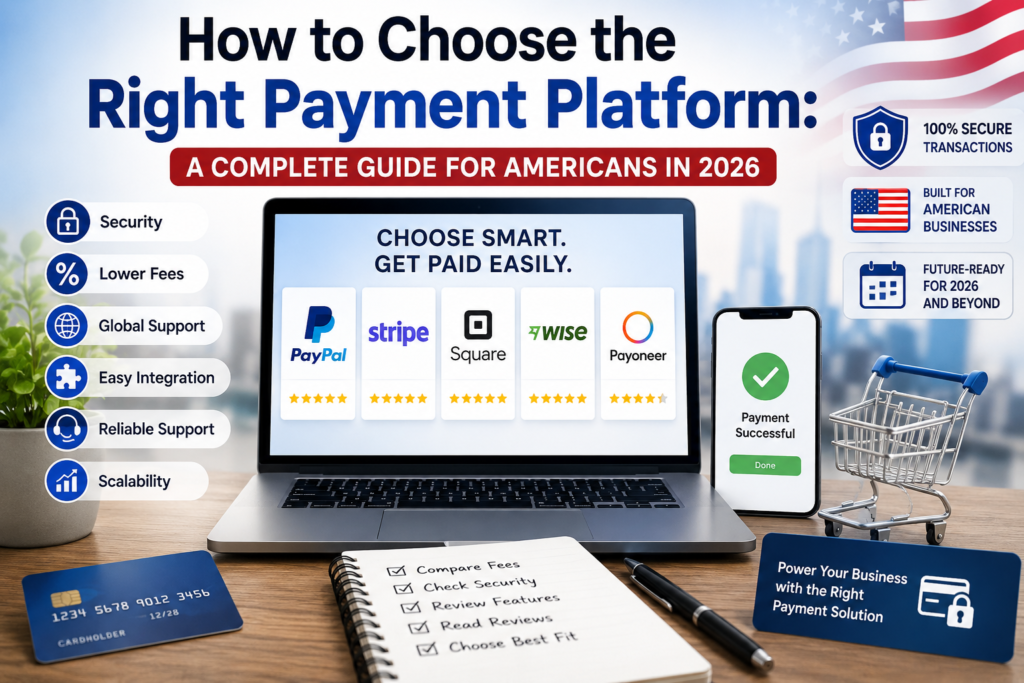
By staff | Last Updated: June 2026
8-minute read
Introduction
Getting paid should be the easiest part of running a business. Yet for many entrepreneurs, freelancers, affiliate marketers, and small business owners, choosing the right payment platform can feel surprisingly complicated.
There are dozens of options available today. Some focus on e-commerce. Others specialize in international transfers. Some offer powerful business tools, while others are designed for simplicity and convenience.
The truth is that the payment platform you choose can affect much more than how money reaches your bank account. It can influence your customer experience, transaction costs, cash flow, security, and even your ability to grow.
Whether you’re launching an online store, building an affiliate marketing business, freelancing full-time, or expanding into international markets, selecting the right payment solution is a decision worth taking seriously.
In this guide, we’ll break down what really matters when comparing payment platforms, the common mistakes to avoid, and which solutions are best suited for different types of businesses.
Why Your Payment Platform Matters More Than You Think
Many business owners make the mistake of choosing a payment processor based on one factor alone: fees.
While transaction fees are important, they’re only part of the picture.
A good payment platform should help you:
- Get paid quickly
- Keep transaction costs under control
- Build trust with customers
- Protect sensitive financial information
- Handle international payments efficiently
- Integrate with your existing business tools
- Support your growth over time
Think of your payment platform as part of your business infrastructure. If it works well, you’ll barely notice it. If it doesn’t, you’ll spend countless hours dealing with delays, customer complaints, and unnecessary expenses.
Business expert Michael E. Gerber emphasizes in The E-Myth Revisited that successful companies are built on reliable systems. Your payment system is one of those critical systems.
Start by Understanding Your Needs
Before comparing providers, take a step back and think about how you’ll actually use the platform.
The best choice for one business may be completely wrong for another.
If You Run an Online Store
You’ll probably need:
- Shopping cart integration
- Recurring billing options
- Mobile payment support
- Fraud prevention tools
- Multiple payment methods
Online shoppers expect convenience. The easier you make the checkout process, the more sales you’re likely to complete.
If You’re a Freelancer or Consultant
Your priorities might look different.
You may care more about:
- Easy invoicing
- Fast payouts
- International transfers
- Low receiving fees
When you’re working with clients across different states or countries, payment flexibility becomes extremely important.
If You Own a Physical Business
Retail stores, restaurants, and service businesses often benefit from platforms that include:
- Point-of-sale systems
- Inventory tracking
- Contactless payments
- Customer management tools
Understanding your needs first will save you from paying for features you’ll never use.
Look Beyond the Advertised Fees
Every payment company loves to promote its low transaction rates.
But those advertised numbers don’t always tell the whole story.
Many platforms charge additional fees for:
- Currency conversions
- International payments
- Chargebacks
- Instant withdrawals
- Monthly subscriptions
A payment processor that appears inexpensive at first glance can become costly once your transaction volume increases.
For example, if your business processes $100,000 annually, even a small difference in fees can mean hundreds or thousands of dollars in additional costs each year.
That’s why it’s important to calculate your expected payment volume before making a decision.
Always look at the complete pricing structure, not just the headline rate.
Security Should Never Be an Afterthought
No business owner wants to think about fraud, data breaches, or cybercrime.
Unfortunately, these risks are part of doing business online.
The payment platform you choose should offer strong security protections such as:
- Data encryption
- Multi-factor authentication
- PCI compliance
- Fraud monitoring
- Chargeback management
A few dollars saved in fees won’t mean much if your business suffers a security incident.
Morgan Housel makes a powerful point in The Psychology of Money: protecting your money is often more important than earning more of it.
The same principle applies here. Choosing a secure payment solution is an investment in your business’s long-term stability.
Think About International Payments
Business is becoming increasingly global.
Even if you’re based in the United States, there’s a good chance you’ll eventually work with international clients, customers, or partners.
If that’s part of your plan, pay close attention to:
- Supported countries
- Available currencies
- Exchange rates
- Transfer speeds
- Currency conversion fees
Many traditional banks charge significant fees for international transfers.
Specialized providers such as Wise and Payoneer have gained popularity because they often offer more transparent pricing and better exchange rates.
Before committing to a platform, ask yourself:
- Can customers pay in their own currency?
- How much will currency conversion cost?
- How quickly can I access my funds?
- Are there limits on receiving payments?
These details may seem minor today, but they become extremely important as your business grows.
Make Sure It Integrates With Your Existing Tools
Technology works best when everything communicates seamlessly.
Your payment platform should connect easily with the software you already use.
Look for integrations with:
- Shopify
- WooCommerce
- QuickBooks
- Xero
- HubSpot
- Email marketing platforms
Automation saves time and reduces mistakes.
Instead of manually entering transactions, your systems can update automatically, giving you more time to focus on serving customers and growing revenue.
James Clear discusses the power of small improvements in Atomic Habits. Streamlining your payment process may seem like a small change, but over time those efficiencies can compound into significant business advantages.
Pay Attention to the Customer Experience
Have you ever abandoned an online purchase because the checkout process was frustrating?
Your customers have too.
A smooth payment experience can directly improve conversion rates.
Today’s consumers expect:
- Fast checkout
- Mobile-friendly payment pages
- Multiple payment methods
- Digital wallet support
- Instant payment confirmations
The fewer obstacles between a customer and the purchase button, the better.
Sometimes the best payment platform isn’t the one with the lowest fees, it’s the one that helps customers complete purchases without hesitation.
Customer Support Matters More Than You Realize
Everything works perfectly—until it doesn’t.
Eventually, you’ll have questions, technical issues, or payment disputes.
When that happens, responsive customer support becomes incredibly valuable.
Before choosing a provider, research:
- Live chat availability
- Phone support options
- Email response times
- Knowledge base quality
- Customer reviews
A company with excellent support can save you countless hours of frustration.
Many business owners don’t appreciate this factor until they urgently need help and can’t get it.
Choose a Platform That Can Grow With You
It’s easy to focus on your current situation.
But what about next year?
Or five years from now?
As your business grows, your payment needs will likely change.
A scalable platform should be able to support:
- Higher transaction volumes
- Subscription payments
- International expansion
- Advanced reporting
- Team management features
In Built to Last, Jim Collins explains that successful organizations think long term. The same mindset applies when selecting business tools.
Choosing a platform that can grow alongside your business can save you from the hassle of switching providers later.
Popular Payment Platforms Worth Considering
- Stripe
Stripe has become one of the most popular payment processors for online businesses.
It’s particularly well suited for:
- E-commerce stores
- Subscription businesses
- SaaS companies
Its flexibility and extensive integrations make it a favorite among growing companies.
- PayPal
PayPal remains one of the most recognized payment brands in the world.
It’s often a strong choice for:
- Freelancers
- Consultants
- Affiliate marketers
- Small online businesses
Many customers already trust and use PayPal, which can help increase payment confidence.
- Wise
If international payments are a priority, Wise deserves serious consideration.
Its transparent pricing and competitive exchange rates make it attractive for global businesses and remote professionals.
- Square
Square shines in the retail and service sectors.
Its hardware, software, and payment processing tools work especially well for businesses that accept in-person payments.
- Payoneer
Payoneer is popular among freelancers, marketplace sellers, and digital entrepreneurs who receive payments from clients and platforms around the world.
Common Mistakes to Avoid
When selecting a payment platform, watch out for these common pitfalls.
- Choosing Based Only on Price
The cheapest option isn’t always the best value.
- Ignoring International Costs
Currency conversion fees can quietly eat into profits.
- Overlooking Security Features
Strong security should always be a top priority.
- Forgetting About User Experience
A complicated checkout process can reduce sales.
- Failing to Plan Ahead
What works today may not work as your business expands.
Books That Can Help You Make Better Business Decisions
If you’d like to deepen your understanding of business systems, finance, and growth, these books are worth reading:
The Psychology of Money
Author: Morgan Housel
Why recommend it:
- Explains how people make financial decisions.
- Helps entrepreneurs develop better money habits.
- Appeals to a broad audience interested in wealth building.
The E-Myth Revisited
Author: Michael E. Gerber
Why recommend it:
- Teaches business systems and scalability.
- Perfect for entrepreneurs and small business owners.
Profit First
Author: Mike Michalowicz
Why recommend it:
- Offers practical strategies for managing business cash flow.
- Highly relevant to payment processing and financial management.
Company of One
Author: Paul Jarvis
Why recommend it:
- Ideal for freelancers, consultants, and affiliate marketers.
- Focuses on sustainable business growth.
Atomic Habits
Author: James Clear
Why recommend it:
- Helps readers improve productivity and consistency.
- Popular affiliate product with broad appeal.
Building a StoryBrand
Author: Donald Miller
Why recommend it:
- Helps businesses communicate their value clearly.
- Excellent for entrepreneurs and marketers.
$100M Offers
Author: Alex Hormozi
Why recommend it:
- Teaches how to create irresistible offers.
- Popular among digital marketers and business owners.
Influence
Author: Robert Cialdini
Why recommend it:
- Explains the science of persuasion.
- Valuable for sales, marketing, and affiliate conversions.
The Lean Startup
Author: Eric Ries
Why recommend it:
- Guides readers on building and scaling businesses efficiently.
- Relevant to startups and online entrepreneurs.
Expert Secrets
Author: Russell Brunson
Why recommend it:
- Focuses on audience building and online sales.
- Popular among affiliate marketers and content creators.
Built to Last
Author: Jim Collins
Why recommend it:
- Offers valuable lessons on creating businesses that stand the test of time.
Final Thoughts
Choosing the right payment platform isn’t just about moving money from one account to another.
It’s about creating a smooth, secure, and reliable experience for both you and your customers.
Take the time to evaluate fees, security, international capabilities, integrations, customer support, and future scalability. The right choice today can save you money, reduce headaches, and support your business for years to come.
For many American entrepreneurs, a combination of Stripe for online sales, PayPal for customer convenience, and Wise for international transactions provides a strong foundation.
At the end of the day, the best payment platform is the one that fits your business goals, supports your growth, and makes getting paid as effortless as possible.
Frequently Asked Questions (FAQs)
1. What is a payment platform?
A payment platform is a service that allows businesses and individuals to send, receive, and process payments electronically. Popular examples include PayPal, Stripe, Square, Wise, and Payoneer. These platforms help businesses accept credit cards, debit cards, digital wallets, and bank transfers securely.
2. How do I choose the best payment platform for my business?
The best payment platform depends on your business type, transaction volume, customer location, and budget. Consider factors such as transaction fees, security, customer support, international payment capabilities, integration options, and ease of use before making a decision.
3. Which payment platform has the lowest fees?
There is no single platform with the lowest fees for every situation. Wise is often known for low international transfer costs, while Stripe and Square offer competitive domestic transaction rates. Always compare total costs, including hidden fees, chargebacks, and currency conversion charges.
4. Is PayPal still a good option for small businesses?
Yes. PayPal remains one of the most trusted payment platforms worldwide. Its brand recognition can increase customer confidence, especially for online purchases. However, businesses should compare PayPal’s fees with other providers to ensure it meets their needs.
5. What is the difference between a payment gateway and a payment processor?
A payment gateway securely transmits payment information between the customer and the merchant. A payment processor handles the actual transaction and transfers funds between financial institutions. Some companies, such as Stripe and Square, provide both services.
6. Which payment platform is best for international payments?
Wise and Payoneer are widely regarded as excellent options for international transactions due to their competitive exchange rates and transparent fee structures. They are especially popular among freelancers, remote workers, and global businesses.
7. Is Stripe better than PayPal?
Stripe and PayPal serve different needs. Stripe offers greater customization and integration options, making it ideal for growing online businesses. PayPal is easier to set up and benefits from strong consumer trust. Many businesses use both.
8. What security features should I look for in a payment platform?
Look for:
- Data encryption
- PCI compliance
- Two-factor authentication
- Fraud detection tools
- Chargeback management
- Secure customer verification processes
Strong security protects both your business and your customers.
9. Can I use more than one payment platform?
Absolutely. Many businesses use multiple payment solutions to provide customers with more choices and reduce reliance on a single provider. For example, a business might use Stripe for credit card processing and Wise for international transfers.
10. How important is mobile payment support?
Mobile payment support is increasingly important because more consumers shop and pay using smartphones. Platforms that support digital wallets such as Apple Pay and Google Pay can improve customer convenience and boost conversions.
11. Are payment platforms safe for online businesses?
Most reputable payment platforms invest heavily in security and fraud prevention. However, businesses should still follow best practices such as enabling two-factor authentication, using strong passwords, and monitoring transactions regularly.
12. What are chargebacks and why do they matter?
A chargeback occurs when a customer disputes a transaction and requests a refund through their bank. Excessive chargebacks can lead to higher fees or account restrictions, making fraud protection tools an important consideration.
13. Which payment platform is best for affiliate marketers?
Affiliate marketers often prefer PayPal, Wise, and Payoneer because many affiliate networks support these payment methods. The best choice depends on where your affiliate programs operate and how you prefer to receive payments.
14. Can a payment platform affect customer trust?
Yes. Customers are more likely to complete a purchase when they recognize and trust the payment provider. Well-known brands such as PayPal and Stripe can help reduce hesitation during checkout.
15. How often should I review my payment platform?
It’s a good idea to review your payment solution annually. Business needs, fees, features, and technology change over time, and a platform that worked well initially may not be the best choice as your business grows.
Disclosure: This article is for informational and educational purposes only and should not be construed as personalized financial advice. Always consult a licensed financial advisor before making investment decisions. This article contains affiliate links. We only recommend books we genuinely believe in.