
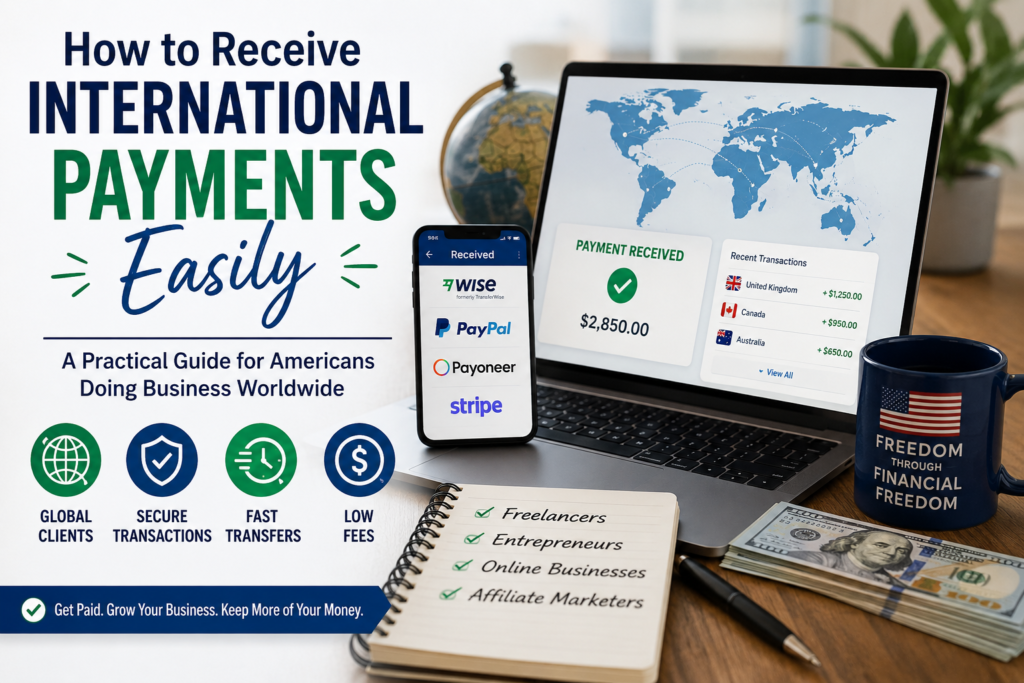
By staff | Last Updated: June 2026
7-minute read
The internet has completely changed the way people earn money.
A freelancer in Texas can work with a client in Australia. An affiliate marketer in Florida can earn commissions from companies in the United Kingdom. An online store owner in California can sell products to customers across Europe and Asia.
The opportunities are endless.
But there’s one challenge that almost everyone encounters sooner or later: getting paid.
If you’ve ever wondered how to receive international payments easily, you’re not alone. Many Americans lose money every year because they’re using expensive payment methods, paying unnecessary fees, or accepting poor currency exchange rates without realizing it.
The good news? Receiving money from overseas is much easier today than it was even a few years ago.
Whether you’re a freelancer, affiliate marketer, content creator, consultant, or online entrepreneur, this guide will show you the best ways to receive international payments while keeping more of your hard-earned income.
Why International Payments Matter More Than Ever
Not long ago, most businesses operated locally. Today, even a one-person business can serve customers around the world.
That’s a huge advantage.
Instead of being limited to your city or state, you can work with clients from Canada, the United Kingdom, Australia, Germany, Singapore, India, and dozens of other countries.
The result?
More opportunities, more customers, and potentially much higher income.
However, international payments come with their own challenges. Transfer fees, currency conversions, payment delays, and banking regulations can all reduce the amount that actually lands in your account.
That’s why choosing the right payment method is so important.
What Should You Look for in an International Payment Solution?
Not all payment platforms are created equal.
Before signing up for any service, consider a few key factors.
- Low Fees
Every dollar matters, especially if you’re receiving payments regularly.
Some providers charge flat fees. Others take a percentage of every transaction. A few even do both.
Those costs can add up surprisingly fast.
- Competitive Exchange Rates
Many people focus on transaction fees and completely overlook exchange rates.
That’s a mistake.
A poor exchange rate can cost more than the transfer fee itself.
- Fast Transfers
Cash flow is the lifeblood of any business. Waiting a week or longer for funds to arrive can create unnecessary stress.
Modern payment platforms often process transfers within hours or a few business days.
- Security
When money is involved, security isn’t optional.
Look for providers that offer strong encryption, fraud protection, and regulatory compliance.
- Global Availability
The best payment solutions support multiple countries and currencies, making life easier for both you and your clients.
The Best Ways to Receive International Payments in America
Let’s look at some of the most popular options available today.
1. PayPal
There’s a good chance you’ve already heard of PayPal.
For many people, it’s the first platform that comes to mind when discussing international payments.
And for good reason.
PayPal is widely recognized around the world, making it easy for international clients to send money without much setup.
What People Like About PayPal
- Easy to use
- Trusted worldwide
- Supports multiple currencies
- Strong buyer and seller protections
- Available in many countries
Potential Downsides
The convenience comes at a price.
PayPal’s transaction fees and currency conversion rates can sometimes be higher than those offered by newer competitors.
Still, for beginners, it’s often one of the easiest ways to start accepting payments from overseas.
2. Wise (Formerly TransferWise)
Wise has become a favorite among freelancers and online business owners.
The reason is simple: transparency.
Wise is known for offering exchange rates that closely match the actual market rate, helping users avoid the hidden costs that often come with international transfers.
Why Wise Stands Out
- Transparent pricing
- Excellent exchange rates
- Multi-currency accounts
- Fast transfers
- Easy-to-understand fee structure
One particularly useful feature is the ability to receive money as if you had a local bank account in several countries.
For affiliate marketers and freelancers working with international clients, that’s a major advantage.
3. Payoneer
If your income comes from global marketplaces or freelance platforms, you’ve probably come across Payoneer.
It’s specifically designed for international business transactions.
Key Benefits
- Supports multiple currencies
- Easy withdrawals to U.S. bank accounts
- Popular among freelancers
- Works with many online marketplaces
- Accepted by businesses worldwide
Many users appreciate Payoneer’s flexibility, especially when working with clients in different countries.
4. Stripe
Stripe is particularly popular among online businesses.
If you sell digital products, memberships, software subscriptions, or online courses, Stripe deserves serious consideration.
Why Businesses Love Stripe
- Global payment acceptance
- Subscription billing capabilities
- Powerful integrations
- Professional checkout experience
- Excellent scalability
As your business grows, Stripe can grow with it.
That’s one reason so many successful online companies rely on the platform.
5. Traditional Bank Wire Transfers
Bank wire transfers have been around for decades and remain a common option for larger transactions.
They’re reliable and widely accepted.
However, they’re not always the most cost-effective choice.
Pros
- Secure
- Trusted worldwide
- Suitable for large payments
Cons
- Higher fees
- Slower processing times
- Less favorable exchange rates
For occasional large transactions, wire transfers may make sense. For frequent payments, many online entrepreneurs prefer modern alternatives.
6. International ACH Payments
ACH payments are becoming increasingly popular for cross-border business transactions.
They’re often less expensive than traditional wire transfers and work particularly well for recurring payments.
Businesses looking to reduce transfer costs frequently choose ACH whenever it’s available.
Tips for Affiliate Marketers Receiving International Payments
Affiliate marketing is a global business.
You might earn commissions from companies based in Europe, Asia, Australia, or anywhere else in the world.
Because affiliate commissions can arrive from multiple sources, having a smart payment strategy matters.
A few practical tips:
- Compare payment fees regularly.
- Choose platforms with competitive exchange rates.
- Offer multiple payment options.
- Track all incoming payments carefully.
- Review currency conversion costs before withdrawing funds.
Saving just a few percentage points on every payment can significantly increase your profits over the course of a year.
Common Mistakes That Cost People Money
Most people don’t lose money because of scams.
They lose money because of small mistakes repeated over and over again.
- Ignoring Exchange Rates
This is probably the biggest mistake.
A payment provider may advertise low fees while quietly making money through unfavorable exchange rates.
Always compare the total cost.
- Limiting Yourself to One Payment Method
Clients have preferences.
Some prefer PayPal. Others prefer Wise or direct bank transfers.
The more options you provide, the easier it becomes for people to pay you.
- Entering Incorrect Banking Information
It sounds obvious, but it happens more often than you’d think.
Double-check account numbers, routing numbers, SWIFT codes, and currency settings before accepting payments.
- Forgetting About Taxes
International income is still income.
Keep detailed records of invoices, payment receipts, and transaction histories. Good bookkeeping today can save major headaches later.
How to Keep More of Your Money
Receiving international payments isn’t just about getting paid.
It’s also about keeping as much of that money as possible.
Here are a few strategies successful entrepreneurs use:
Use Multi-Currency Accounts
Holding funds in different currencies gives you greater flexibility and can help reduce conversion costs.
Consolidate Payments
Receiving fewer large payments instead of many small ones often reduces fees.
Review Providers Regularly
Payment companies change their pricing structures from time to time.
What was the cheapest option last year may not be the best option today.
Negotiate Payment Methods
Long-term clients are often willing to use your preferred payment platform if it saves both parties money.
Lessons from Some of the Best Personal Finance Books
Many of the world’s most respected finance authors emphasize the importance of managing cash flow efficiently.
In The Psychology of Money by Morgan Housel, one recurring theme is that building wealth isn’t only about earning more—it’s also about keeping more of what you earn.
Similarly, Profit First by Mike Michalowicz teaches business owners to prioritize profitability by controlling expenses and improving cash management.
Robert Kiyosaki’s Rich Dad Poor Dad highlights the importance of building systems that make money work efficiently rather than constantly working harder for money.
Deep Work by Cal Newport helps online professionals increase productivity and earnings.
Timothy Ferriss’s The 4-Hour Workweek covers remote work, automation, and location-independent income.
Company of One by Paul Jarvis is a deal for freelancers and solo entrepreneurs.
These lessons apply directly to international payments. Every unnecessary fee is money that could have remained in your business.
The Future of International Payments
The future looks bright for freelancers, affiliate marketers, and online entrepreneurs.
Technology continues to make international payments faster, cheaper, and more accessible.
We’re already seeing:
- Near-instant global transfers
- Improved fraud protection
- Lower transaction costs
- Better currency exchange options
- Advanced digital wallets
- More flexible multi-currency banking solutions
As competition among payment providers increases, consumers and businesses will likely benefit from even better services.
Final Thoughts
Receiving international payments doesn’t have to be complicated.
Today, Americans have access to a variety of powerful tools that make getting paid from overseas easier than ever.
For many freelancers, affiliate marketers, and online business owners, platforms like Wise, PayPal, Payoneer, and Stripe provide an excellent balance of convenience, affordability, and reliability.
The key is to look beyond the advertised fees. Pay attention to exchange rates, transfer speeds, and overall costs.
After all, the goal isn’t simply to earn money—it’s to keep as much of it as possible.
Choose the right international payment solution, and you’ll spend less time worrying about transactions and more time growing your business on a global scale.
Frequently Asked Questions (FAQs)
1. What is the easiest way to receive international payments in the United States?
The easiest way depends on your business needs. For most freelancers, affiliate marketers, and online entrepreneurs, platforms like PayPal, Wise, and Payoneer offer a simple setup, fast transfers, and global accessibility. They eliminate much of the complexity associated with traditional bank wire transfers.
2. What is the cheapest way to receive money from overseas?
Wise is often considered one of the most cost-effective options because it offers transparent fees and exchange rates that closely match the real market rate. However, the cheapest option can vary depending on the country, currency, and payment amount.
3. How long do international payments take to arrive?
Transfer times vary by provider. Some digital payment platforms process payments within minutes or hours, while bank wire transfers may take between one and five business days. Factors such as banking holidays, currency conversions, and verification requirements can affect processing times.
4. Are international payments taxable in the United States?
Yes. In most cases, income received from international clients, affiliate programs, or overseas businesses is taxable in the United States. Keeping detailed records of payments, invoices, and expenses is essential for accurate tax reporting.
5. What information do I need to receive an international payment?
Depending on the payment method, you may need:
- Your full legal name
- Bank account number
- Routing number
- SWIFT/BIC code
- IBAN (if applicable)
- Email address linked to your payment platform
Always verify your details carefully before sharing them with clients.
6. Is PayPal safe for receiving international payments?
Yes. PayPal is generally considered safe and secure. It uses encryption technology and fraud protection measures. However, users should be aware of transaction fees and currency conversion costs, which can sometimes be higher than those of competing services.
7. Which payment platform is best for freelancers?
Many freelancers prefer Wise or Payoneer because of their competitive fees and international capabilities. The best choice depends on your client base, payment frequency, and preferred withdrawal options.
8. What is the difference between Wise and PayPal?
The main difference is cost structure. Wise is known for offering transparent exchange rates and lower conversion costs, while PayPal offers greater global recognition and convenience. Many online professionals use both platforms depending on the client.
9. Can I receive payments in multiple currencies?
Yes. Several providers, including Wise and Payoneer, allow users to receive, hold, and manage funds in multiple currencies. This feature can help reduce unnecessary conversion fees.
10. What is a SWIFT code, and why is it important?
A SWIFT code is an international banking identifier used to route money between financial institutions worldwide. Clients often need your bank’s SWIFT code when sending international wire transfers.
11. How can I reduce international payment fees?
You can reduce fees by:
- Using providers with competitive exchange rates
- Holding funds in multiple currencies
- Consolidating payments when possible
- Comparing transfer services regularly
- Negotiating preferred payment methods with clients
12. What is the best payment solution for affiliate marketers?
Affiliate marketers typically benefit from using multiple payment options. Wise, PayPal, Payoneer, and direct bank deposits are among the most popular choices because they accommodate different affiliate networks and international advertisers.
13. Are bank wire transfers still a good option?
Yes, particularly for large transactions. While they may involve higher fees and longer processing times, wire transfers remain one of the most reliable methods for transferring significant amounts of money internationally.
14. Can I receive international payments without a business account?
Yes. Many platforms allow individuals to receive international payments using personal accounts. However, if you operate a growing business, a dedicated business account may offer additional features and better financial organization.
15. What should I do if an international payment is delayed?
Start by confirming the payment status with the sender. Verify that all banking information is correct and contact the payment provider if necessary. Delays can occur because of compliance checks, banking holidays, or currency processing requirements
Disclosure: This article is for informational and educational purposes only and should not be construed as personalized financial advice. Always consult a licensed financial advisor before making investment decisions. This article contains affiliate links. We only recommend books we genuinely believe in.