
Let’s be real for a second—budgeting doesn’t exactly sound exciting.
For most people in the U.S., it feels like a punishment. Like you’re about to sit down, cut out everything fun, and track every dollar until life becomes… boring.
But that’s not what budgeting is supposed to be.
A good budget isn’t about restriction. It’s about control. It’s about knowing where your money is going so you can actually enjoy it—without stress, guilt, or constant worry.
If you’ve ever looked at your bank account and wondered, “Where did all my money go?”—this guide is for you.
Let’s break down simple, realistic budgeting tips that actually work in real life—not just in theory.
Why Most Budgets Don’t Work
Before we fix the problem, we need to understand it.
Most budgets fail because they’re:
- Too strict
- Too complicated
- Not built for real life
- Missing “unexpected” expenses (that aren’t really unexpected)
Think about it—life isn’t predictable. Basically, you’ll have birthdays, emergencies, random expenses, and moments where you just want to enjoy your money.
So instead of building a perfect budget, you need a flexible one you can stick to.
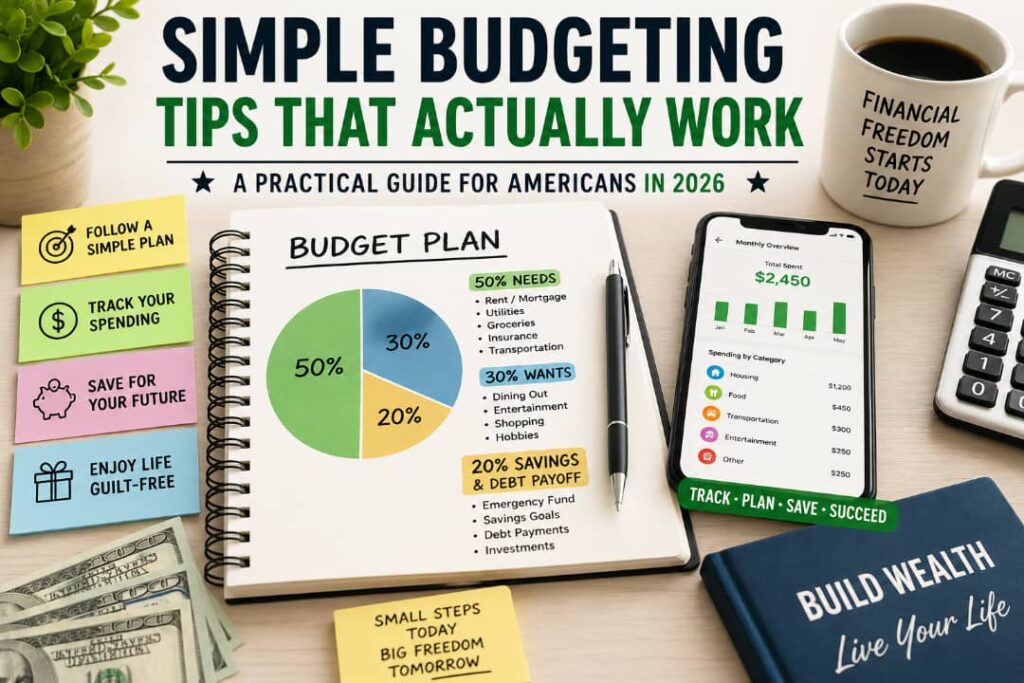
1. Start Simple With the 50/30/20 Rule
If budgeting has never worked for you before, don’t overcomplicate it.
Start with something simple—like the 50/30/20 rule, popularized by Elizabeth Warren in All Your Worth: The Ultimate Lifetime Money Plan.
Here’s the idea:
- 50% for needs (rent, bills, groceries)
- 30% for wants (eating out, shopping, entertainment)
- 20% for savings or debt
That’s it.
No complicated categories. No stress.
And if your numbers don’t match perfectly? That’s okay. This isn’t a rule you obey—it’s a guideline you adjust.
2. Pay Attention to Where Your Money Actually Goes
You don’t need to track every dollar forever—but you do need awareness.
Because most people don’t realize how much they’re spending on small things like:
- Food delivery
- Subscriptions
- Random online purchases
Those little expenses add up fast.
Instead of guessing, use tools like:
- Mint
- YNAB
- EveryDollar
They do the heavy lifting for you.
Once you see the numbers clearly, you’ll naturally start making better decisions—without forcing it.
3. Give Your Money a Plan Before You Spend It
One of the simplest mindset shifts is this:
👉 Don’t wait to see where your money went
👉 Decide where it should go first
This idea comes from You Need a Budget by Jesse Mecham.
Instead of spending freely and hoping it works out, assign your money a purpose:
- Bills
- Savings
- Fun
- Food
Even your “fun money” gets a category—and that’s important.
Because when spending is planned, you enjoy it more and feel less guilty.
4. Expect the Unexpected (Because It Will Happen)
This is where most budgets break.
Not because people are careless—but because life happens.
- Car repairs
- Medical bills
- Travel
- Emergencies
If you’re not prepared, one expense can throw everything off.
That’s why building a small safety cushion matters—something Dave Ramsey strongly emphasizes in The Total Money Makeover.
Start small:
- $500
- Then $1,000
- Then build from there
It’s not about the amount—it’s about having something to fall back on.
5. Use Cash Where You Struggle Most
We all have weak spots.
Maybe it’s eating out. Maybe it’s shopping. Maybe it’s impulse spending online.
One simple trick? Switch to cash for that category.
Withdraw a set amount for the week—and when it’s gone, you stop.
It might sound basic, but it works because:
- You physically see your money leaving
- You become more intentional
- You slow down spending
Sometimes simple beats complicated.
6. Don’t Cut Everything—Cut What Doesn’t Matter
A lot of people try to budget by cutting everything.
That’s usually where things fall apart.
Instead, take a smarter approach inspired by Ramit Sethi in I Will Teach You to Be Rich:
👉 Cut spending on things you don’t care about
👉 Keep (and enjoy) what you love
So yes:
- Cancel unused subscriptions
- Reduce mindless spending
But don’t remove the things that actually make your life better.
That’s how you make a budget sustainable.
7. Make Saving Automatic (So You Don’t Have to Think About It)
Relying on discipline alone? That’s tough.
Automation makes things easier.
Set up:
- Automatic transfers to savings
- Automatic bill payments
- Automatic investments
Platforms like Udemy and Coursera often teach this as a core financial habit—and for good reason.
Because when it’s automatic:
- You don’t forget
- You don’t procrastinate
- You stay consistent
8. Plan for Expenses That Aren’t Monthly
Here’s a mistake that catches people off guard:
Budgeting only for monthly bills.
But what about:
- Holidays
- Birthdays
- Annual fees
- Car maintenance
These aren’t surprises—they’re just irregular.
The fix is simple: Break them into monthly amounts and save a little each month.
That way, when the expense comes, you’re ready.
9. Check In With Your Money (Just Once a Week)
You don’t need hours of budgeting.
Just 10 minutes a week is enough.
Look at:
- What you spent
- What needs adjusting
- What’s coming up
That small habit keeps everything on track—and prevents bigger problems later.
10. Focus on Earning More (Not Just Saving More)
Cutting expenses helps—but it has limits.
At some point, increasing your income makes a bigger difference.
Some popular options in the U.S. Honestly, right now include:
- Freelancing
- Affiliate marketing
- Selling digital products
- Gig work
Platforms like ClickBank and Digistore24 are common starting points.
More income gives you:
- Breathing room
- Faster savings
- More flexibility
11. Don’t Let Lifestyle Creep Take Over
One of the easiest ways to stay stuck financially?
Earning more—and spending more.
It happens quietly:
- A better salary → a nicer apartment
- More income → more eating out
- Extra money → more “treat yourself” spending
Instead, try this: When your income increases, increase your savings first.
That’s how wealth actually builds.
12. Progress Beats Perfection Every Time
You don’t need a perfect budget.
You need a working one.
You’ll mess up sometimes. Everyone does.
What matters is:
- You keep going
- You adjust
- You improve
Even small changes—like saving $20 or cutting one expense—add up over time.
13. Find a System That Fits You
Not everyone budgets the same way.
Some people love apps. Others prefer cash. Some like spreadsheets.
Try different methods until something clicks.
Because the best budget isn’t the smartest one—it’s the one you’ll actually stick to.
14. Learn From What Already Works
If you want to go deeper, these are solid resources:
- The Total Money Makeover – strong focus on discipline and debt
- I Will Teach You to Be Rich – practical and modern
- You Need a Budget – step-by-step system
You can also explore structured courses on Udemy or Coursera if you prefer guided learning.
Final Thoughts: Make Your Budget Work for You
At the end of the day, budgeting isn’t about being strict—it’s about being intentional.
It’s about:
- Knowing where your money goes
- Making room for what matters
- Reducing stress around finances
Start small:
- Track your spending
- Use a simple structure
- Automate what you can
- Adjust as you go
You don’t need to get it perfect.
You just need to start—and keep going.
Frequently Asked Questions (FAQs)
1. What is the easiest way to start budgeting?
The easiest way to start budgeting is by using a simple framework like the 50/30/20 rule, popularized by Elizabeth Warren in All Your Worth: The Ultimate Lifetime Money Plan. It helps you divide your income into needs, wants, and savings without overcomplicating things. Many beginners also use apps like Mint or YNAB to get started quickly.
2. Why do most budgets fail?
Most budgets fail because they’re too strict or unrealistic. People often forget to include irregular expenses like car repairs or holidays. Tools like EveryDollar help simplify budgeting by making it more flexible and easier to track in real time.
3. How can I stick to a budget consistently?
Consistency comes from simplicity and automation. Instead of relying on willpower, automate your savings and bills. Many financial strategies taught in I Will Teach You to Be Rich by Ramit Sethi emphasize setting up automatic systems so you don’t have to think about it.
4. What are the best budgeting apps for beginners in the U.S.?
Some of the most beginner-friendly budgeting apps include:
- Mint
- YNAB
- EveryDollar
Each offers features like expense tracking, goal setting, and financial insights.
5. How much should I save each month?
A common recommendation is to save at least 20% of your income, based on the 50/30/20 rule. However, if that’s not realistic right now, start small—even saving $50 per month is a great first step.
6. What is the “pay yourself first” budgeting method?
“Pay yourself first” means prioritizing savings before spending on anything else. This approach is widely discussed in books like The Total Money Makeover by Dave Ramsey and helps build long-term financial security.
7. How do I budget if I live paycheck to paycheck?
Start by tracking every dollar and identifying unnecessary expenses. Focus on small wins, like cutting one subscription or reducing takeout. You can also explore additional income streams through platforms like ClickBank or Digistore24 to increase your earnings.
8. Is it better to use cash or digital budgeting tools?
It depends on your habits. If you tend to overspend, the cash envelope system can help you stay disciplined. If you prefer convenience, digital tools like YNAB provide better tracking and automation.
9. How do I handle unexpected expenses in my budget?
The best way is to build an emergency fund. Start with $500 to $1,000, then gradually increase it. This strategy is strongly recommended in The Total Money Makeover.
10. Can budgeting actually help me get out of debt?
Yes. Budgeting helps you control your spending and direct extra money toward debt repayment. Methods like the debt snowball, taught by Dave Ramsey, are especially effective.
11. How often should I review my budget?
A weekly check-in (about 10 minutes) is enough to stay on track. This helps you adjust spending and avoid surprises before they become problems.
12. What are common budgeting mistakes to avoid?
Some common mistakes include:
- Not tracking spending
- Being too restrictive
- Ignoring irregular expenses
- Not adjusting the budget over time
Using structured systems like You Need a Budget by Jesse Mecham can help avoid these pitfalls.
13. Should I focus more on saving or earning more?
Both matter, but increasing your income can have a bigger impact long-term. Budgeting works best when combined with income growth strategies like freelancing or affiliate marketing.
14. Are budgeting courses worth it?
Yes, especially if you prefer guided learning. Platforms like Udemy and Coursera offer affordable courses that can help you build strong financial habits faster.
15. How long does it take for budgeting to work?
You can start seeing results within a few weeks—especially if you track your spending and cut unnecessary expenses. Long-term results, like savings growth and debt reduction, usually take a few months of consistency.